How to Check and Refill Your Engine Coolant
Your car’s engine generates a lot of heat, and keeping it cool is one of its most important jobs. That’s where engine coolant, or antifreeze, comes in. This vital fluid circulates through your engine to prevent it from overheating in the summer and freezing in the winter. But it’s not a ‘set it and forget it’ fluid. Low or dirty coolant can lead to serious engine damage and expensive repairs. Fortunately, checking and refilling your coolant is a simple task that anyone can learn to do. This guide will walk you through the process step-by-step, from safely checking your levels to choosing the right coolant for your vehicle. Taking a few minutes for this basic maintenance can save you from a major headache down the road. This is especially important in a place with varied seasons, such as Grand Rapids, Michigan.
Key Takeaways
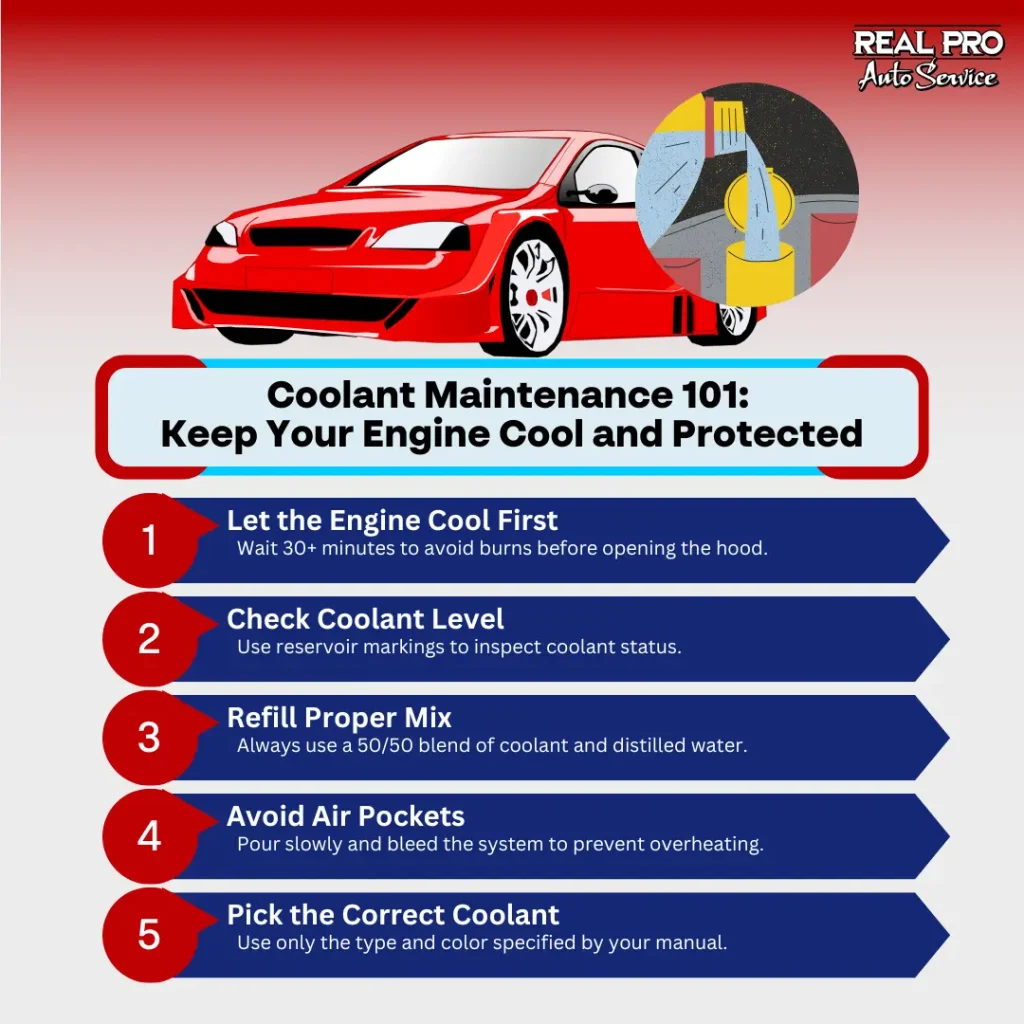
- Allow the engine to cool for at least 30 minutes before checking coolant levels to avoid burns.
- Inspect the coolant reservoir for leaks and assess the coolant level against the markings.
- If the coolant is below the “low” mark, add the appropriate type and mix it with distilled water.
- Pour coolant slowly to prevent air pockets, and consult your owner’s manual for specific recommendations.
- After refilling, bleed the cooling system to remove trapped air, ensuring efficient coolant circulation.
The Importance of Maintaining Proper Engine Coolant Levels
Maintaining proper engine coolant levels is essential for regulating your engine’s temperature and preventing overheating. If coolant levels drop too low, you risk severe engine damage that can lead to costly repairs. Keeping an eye on your coolant will help guarantee your vehicle runs smoothly and efficiently.
How Coolant Regulates Engine Temperature and Prevents Overheating
Coolant plays an essential role in regulating your engine’s temperature and preventing overheating. It circulates through the engine, absorbing heat and transferring it to the radiator, where it dissipates. If the coolant level is too low, your engine might not be able to maintain the ideal temperature, leading to potential damage. That’s why knowing how to check the engine coolant is vital. Regularly inspect the coolant reservoir and verify it’s at the proper level. If it’s low, you’ll need to refill it with the appropriate mixture of coolant and water. By keeping an eye on your coolant levels, you can help avoid overheating and keep your engine running smoothly for years to come.
Potential Engine Damage Resulting from Low Coolant Levels
When your engine coolant levels drop too low, you risk serious damage to your engine. The coolant not only regulates temperature but also prevents overheating. Insufficient coolant can lead to engine parts overheating, potentially causing warping or even a blown head gasket. These issues can be costly to repair and may leave you stranded. Additionally, low coolant levels can trigger your vehicle’s check engine light, alerting you to potential problems. If you notice this warning, it’s important to check your coolant levels immediately. Professional cooling system service at Real Pro Auto in Grand Rapids, MI, can diagnose and repair issues before they cause significant damage.
Step-by-Step Guide to Checking Your Engine Coolant
Before you check your engine coolant, it’s essential to follow some safety precautions to avoid any accidents. Once you’re ready, you’ll need to locate the coolant reservoir and radiator cap to get started. Finally, you can assess the coolant level and its condition to guarantee everything’s running smoothly.
Safety Precautions Before Inspecting Coolant Levels
Inspecting your engine coolant levels can be a straightforward task, but it’s vital to prioritize safety first.
Before you check the engine coolant level, make sure you take these essential precautions:
- Allow the Engine to cool: Always wait for at least 30 minutes after driving before opening the hood to prevent burns from hot coolant or steam.
- Wear Protective Gear: Use gloves and safety glasses to protect your skin and eyes from any accidental spills.
- Check for Leaks: Inspect the area around your coolant reservoir for any signs of leaks or damage before you start.
Locating the Coolant Reservoir and Radiator Cap
Locating the coolant reservoir and radiator cap is vital for checking your engine coolant levels effectively. Start by popping the hood of your vehicle and securing it. The coolant reservoir is typically a translucent plastic tank, often labeled as “coolant,” and is usually located near the radiator. Look for a cap that’s typically colored yellow or green. Make sure you can easily access it without any obstructions. The radiator cap, which is usually metal, sits directly on top of the radiator itself. Familiarizing yourself with these components is important for knowing how to check the engine coolant level later. Always remember to let your engine cool down before accessing these parts to avoid burns or injury.
Assessing Coolant Level and Condition
Now that you’ve found the coolant reservoir and radiator cap, it’s time to check the coolant level and its condition. This step is vital for preventing overheating and ensuring your engine runs smoothly.
Here’s how to do it:
- Inspect the Coolant Level: Look at the markings on the reservoir. If the level’s below the “low” mark, you’ll need to add coolant.
- Check for Color and Clarity: Good coolant is usually bright and clear. If it’s dark, muddy, or has particles, it may need to be replaced.
- Watch for Warning Signs: If your check engine or coolant warning light illuminates, it’s crucial to take action promptly to prevent costly damage.
How to Refill Your Engine Coolant Safely
When it’s time to refill your engine coolant, you’ll want to start by choosing the right type for your vehicle. Proper mixing ratios are essential, and using the right filling techniques can prevent issues down the line. Don’t forget to bleed any air from the cooling system to guarantee peak performance.
Choosing the Right Coolant for Your Vehicle
Choosing the right coolant for your vehicle is crucial not only for peak engine performance but also for preventing potential damage. Here are three key factors to take into account:
- Type of Coolant: Different vehicles require specific coolant formulas, such as conventional, organic acid technology (OAT), or hybrid organic acid technology (HOAT). Check your owner’s manual for recommendations.
- Color and Additives: Coolants come in various colors, and each may contain different additives. Verify you use a compatible color to avoid chemical reactions.
- How to Check Engine Coolant Temperature: Understanding how to monitor coolant temperature helps you maintain ideal engine performance. Regular checks can prevent overheating and system failure.
Proper Mixing Ratios and Filling Techniques
To guarantee your engine runs smoothly, it’s essential to refill your coolant with the correct mixture and technique. Typically, a 50/50 blend of coolant and distilled water works best. This ratio provides ideal protection against freezing and overheating. Before refilling, ensure the engine is cool to prevent burns and ensure accurate readings.
When adding the coolant, pour it in slowly to avoid air pockets, which can lead to overheating. Remember, if you notice your check engine light illuminated, it might be due to low coolant levels. If you’re experiencing issues with your heater core, low coolant could be a contributing factor. In that case, cooling system service at our Grand Rapids location is necessary.
Let Real Pro Auto Handle Your Cooling System with Confidence
Bleeding air from your cooling system may seem like a small step, but it’s critical for preventing overheating and maintaining proper coolant flow. If not done correctly, trapped air can cause your engine to overheat or trigger warning lights. That’s why Real Pro Auto Service is here to help. Our experienced technicians know exactly how to service your cooling system, including safely bleeding air, checking for leaks, and topping off coolant with the proper blend. If you’re unsure about handling it or just want peace of mind, schedule a cooling system service with Real Pro Auto today—we’ll make sure your engine stays protected and performing its best.
Frequently Asked Questions
What Type of Coolant Should I Use for My Vehicle?
You should use the coolant specified in your vehicle’s owner’s manual. It’s important to match the type, whether it’s traditional green, extended-life orange, or another formulation, to guarantee peak performance and prevent overheating.
How Often Should I Check My Engine Coolant Levels?
Did you know nearly 60% of engine overheating issues stem from low coolant levels? You should check your engine coolant every month, particularly before long trips, to guarantee your vehicle runs smoothly and efficiently.
Can Low Coolant Cause Engine Overheating?
Yes, low coolant can cause your engine to overheat. It’s essential to maintain proper coolant levels to guarantee your engine runs efficiently and to prevent severe damage. Always keep an eye on those levels!
What Are the Signs of a Coolant Leak?
If you notice puddles under your car, a sweet smell, or fluctuating engine temperatures, you might have a coolant leak. These symptoms can also indicate radiator problems that cause overheating. Keep an eye on your coolant levels, and don’t hesitate to seek professional help.
Is It Safe to Mix Different Coolant Types?
Did you know that over 60% of drivers unknowingly mix different types of coolant? It’s not safe to mix different coolant types, as it can lead to corrosion or reduced effectiveness. Always check compatibility before adding coolant.
What happens if you put the wrong coolant in your car?
Using the wrong coolant in your car can cause significant problems for your cooling system. Coolants are formulated with specific additives designed for different types of engines and materials, like aluminum or cast iron. Suppose you mix incompatible types, such as an OAT (Organic Acid Technology) coolant with a traditional IAT (Inorganic Additive Technology) coolant. In that case, the chemical reaction can cause the fluid to gel or become sludgy. This thick substance can clog the radiator, heater core, and narrow passages within the engine, leading to poor circulation and overheating. It can also accelerate corrosion, damaging metal and plastic components over time. Always check your owner’s manual for the specific type of coolant your vehicle requires to avoid these costly and harmful mistakes.
Can I just add water to my coolant?
While adding a small amount of water to your coolant in an emergency is better than running the engine with a low level, it should only be a temporary solution. Coolant is a mixture of antifreeze and water, typically a 50/50 ratio, for a reason. The antifreeze component provides crucial protection against both freezing and boiling, while also containing anti-corrosion additives that protect your engine and radiator. If you add too much water, you dilute these protective properties. This raises the freezing point and lowers the boiling point of the fluid, making your engine vulnerable to extreme temperatures. It also weakens the corrosion inhibitors. For this reason, you should always use distilled water, as tap water contains minerals that can cause buildup and corrosion in the cooling system. After adding water in an emergency, have your system flushed and refilled with the proper mixture as soon as possible.
Conclusion
Checking and maintaining your engine coolant is a simple but essential part of responsible car ownership. By regularly inspecting the level and condition of your coolant, you can prevent your engine from overheating and avoid expensive, long-term damage. Remember to work on a cool engine always and use the specific type of coolant recommended for your vehicle. This small bit of proactive maintenance provides peace of mind, ensuring your car is ready to handle both hot summer days and cold winter mornings. Taking care of your cooling system is a straightforward way to protect your investment and keep your vehicle running reliably for years to come. If you’re ever unsure about your vehicle’s maintenance, a trusted auto repair service can provide the expert help you need.