Why Overheating Could Signal a Radiator Problem
An engine that’s overheating is a serious problem that should never be ignored.
When your car’s temperature gauge starts climbing into the red, it’s a clear sign that something is wrong with the cooling system. And at the heart of that system is the radiator.
The radiator’s job is to dissipate the immense heat generated by the engine, and if it can’t do its job effectively, the engine’s temperature will quickly rise to dangerous levels.
This can lead to catastrophic damage, including a warped cylinder head or a cracked engine block.
This guide will explain the critical role the radiator plays, the common radiator problems that lead to overheating, and what you can do to prevent them.
Key Takeaways
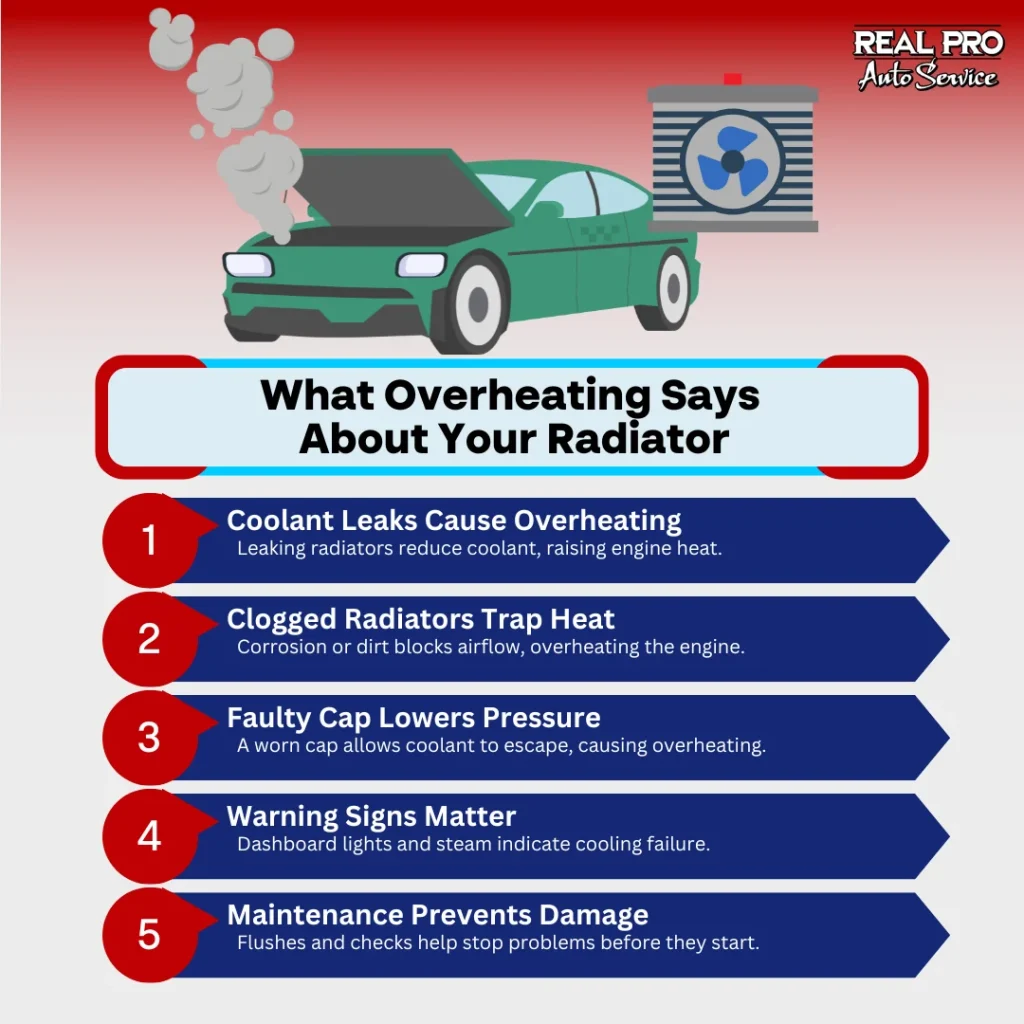
- Overheating often indicates coolant loss due to radiator leaks or cracks, hindering the cooling system’s effectiveness.
- A clogged or corroded radiator restricts airflow, preventing proper heat dissipation and resulting in increased engine temperatures.
- A faulty radiator cap can lead to low coolant pressure, causing overheating by allowing coolant to escape.
- Insufficient coolant levels, often stemming from radiator issues, directly contribute to engine overheating and potential damage.
- Regular radiator maintenance ensures optimal performance and helps prevent overheating by addressing potential problems before they escalate.
What Happens When Your Engine Overheats?
When your engine overheats, it can lead to serious damage if you don’t address it quickly. You might notice warning signs on your dashboard, so it’s essential to pay attention.
Ignoring these signals could result in costly repairs and compromised engine performance.
Immediate damage risks to your engine and components
Overheating can lead to serious consequences for your engine and its components, as heat can cause metal parts to expand and warp, potentially compromising their integrity.
If you ignore that overheating engine warning, you risk severe damage, including blown gaskets or even a cracked engine block. A warped cylinder head can disrupt the engine’s compression, leading to costly repairs.
Additionally, the oil in your engine can break down under excessive heat, compromising lubrication and increasing friction between moving components. This can result in premature wear or even complete engine failure.
It’s essential to address any signs of overheating immediately to protect your investment and guarantee your vehicle runs smoothly.
Don’t wait for the damage to escalate; act swiftly to prevent costly consequences.
Warning signs to watch for on your dashboard
How can you tell if your engine is in trouble? Keep an eye on your dashboard for warning signs that indicate a bad radiator.
If the temperature gauge is creeping into the red zone, it’s a clear sign something’s wrong. You might also see the check engine light flicker on.
Additionally, look out for steam rising from under the hood or a sweet smell of coolant; these can signify overheating and radiator issues.
If your car’s warning lights are persistent or you notice a drop in performance, don’t ignore them. Addressing these signs early can prevent severe engine damage and costly repairs.
Always trust your dashboard indicators—they’re your first line of defense against a failing radiator.
The Radiator’s Role in Your Vehicle’s Cooling System
The radiator plays a crucial role in maintaining the engine’s optimal temperature. It regulates engine heat by facilitating the flow of coolant and promoting heat dissipation.
Understanding how this system works can help you prevent overheating issues in your vehicle.
How it regulates engine temperature
Although many drivers overlook it, the radiator plays an essential role in regulating your engine’s temperature.
It’s a critical component of your engine cooling system, ensuring that your vehicle doesn’t overheat during operation. When your engine runs, it generates heat, which needs to be dissipated to maintain peak performance.
The radiator helps achieve this by circulating coolant, absorbing heat from the engine, and then releasing it into the air.
If you experience engine cooling system issues, such as a malfunctioning radiator, it can lead to overheating and serious engine damage. Regular maintenance and inspections can help you identify potential radiator problems before they escalate, ensuring your engine stays cool and operates efficiently.
Coolant flow and heat dissipation explained
Without a properly functioning radiator, your vehicle’s engine can quickly overheat, leading to costly repairs.
The radiator plays an essential role in your vehicle’s cooling system by dissipating heat generated by the engine. As coolant circulates through the engine, it absorbs heat and carries it to the radiator.
There, the heat is released into the air, allowing the coolant to return to the engine at a lower temperature. If coolant isn’t circulating effectively—due to a blockage or a malfunctioning pump—heat won’t dissipate as it should.
This can cause the engine to overheat, leading to severe damage. Regular maintenance guarantees your radiator and cooling system function efficiently, preventing overheating and prolonging your engine’s life.
Common Radiator Problems That Lead to Overheating
If your car is overheating, it might be due to common radiator issues. You could be facing leaks, clogged fins, or even a faulty radiator cap.
Understanding these problems can help you prevent further damage and keep your engine running smoothly.
Leaks or cracks in the radiator
When it comes to radiator issues, leaks or cracks can be particularly troublesome, as they often lead to overheating.
You might notice leaking radiator signs, like puddles of coolant under your vehicle or a low coolant level in the reservoir.
These issues can escalate quickly if not addressed, causing your engine to overheat and potentially leading to severe damage.
Pay attention to any unusual hissing or bubbling sounds, as they can indicate escaping coolant.
Additionally, a sweet smell inside your car could signal a coolant leak.
If you observe any of these symptoms, it’s essential to have your radiator inspected and repaired promptly to avoid further complications and keep your vehicle running smoothly.
Clogged or corroded radiator fins
Clogged or corroded radiator fins can significantly impair your vehicle’s cooling efficiency, making it crucial to address these issues promptly.
When dirt, debris, or corrosion builds up on the fins, it restricts airflow, preventing the radiator from dissipating heat effectively. This can lead to overheating and potentially serious engine damage.
You might notice symptoms like fluctuating temperature gauges or steam coming from under the hood, which are clear signs of clogged radiator problems.
Professional radiator repair at Real Pro Auto in Grand Rapids can clean or replace your radiator to restore proper cooling.
Faulty radiator cap or low coolant levels
One common issue that can lead to overheating is a faulty radiator cap or low coolant levels.
The radiator cap plays a vital role in maintaining the system’s pressure and preventing coolant from boiling over. If the cap is damaged or doesn’t seal properly, it can cause coolant to escape, leading to low coolant levels.
Learning how to check and refill your engine coolant helps you maintain proper coolant levels and prevent overheating.
How to Prevent Radiator Issues Before They Start
To keep your radiator running smoothly, regular maintenance is key. You should get coolant flushes and check the health of hoses, fans, and the thermostat.
Staying proactive can save you from costly repairs down the road.
Regular coolant flushes and maintenance
Regular coolant flushes and maintenance are essential for preventing radiator problems, as they help remove contaminants and guarantee the system operates efficiently.
By regularly flushing the coolant, you can eliminate rust, dirt, and other debris that accumulate over time, leading to overheating and damage. It’s important to follow your vehicle’s manufacturer guidelines for maintenance intervals, ensuring the coolant remains clean and effective.
During these maintenance sessions, also check the coolant levels and inspect for any leaks or wear. Keeping your cooling system in top shape not only extends the life of your radiator but also improves overall engine performance.
Don’t wait for a problem to arise; proactive care will save you time and money in the long run.
Checking hoses, fans, and thermostat health
Keeping your cooling system well-maintained involves more than just flushing the coolant.
Regular checks on hoses, fans, and the thermostat are essential to preventing radiator issues.
Neglecting these components can lead to radiator failure symptoms that can leave you stranded.
Here’s what you should inspect:
- Hoses: Look for cracks or leaks.
- Fans: Verify they engage when the engine heats up.
- Thermostat: Test its opening and closing function.
- Connections: Tighten any loose clamps.
- Coolant Levels: Monitor for any drops in fluid.
Get Expert Cooling System Repairs at Real Pro Auto Service
If you’re facing overheating issues, it’s essential to schedule a diagnostic to find the root cause.
At Real Pro Auto Service, we specialize in repairing radiators, water pumps, thermostats, and more. You can trust our ASE-certified team to keep your engine cool and running smoothly.
Schedule a diagnostic to pinpoint the cause of overheating
When your vehicle starts to overheat, it’s crucial to schedule a diagnostic as soon as possible to identify the underlying issue. Ignoring this problem could lead to severe engine damage and costly repairs.
Expert cooling system diagnostics will pinpoint the root cause of the overheating, ensuring your vehicle runs smoothly again.
Here are some benefits of scheduling a diagnostic:
- Identify issues before they escalate
- Save money on potential repairs
- Enhance your vehicle’s performance
- Increase safety on the road
- Extend the lifespan of your engine
Don’t wait until it’s too late. Reach out to Real Pro Auto Service to get the expert help you need and keep your vehicle in peak condition.
We repair radiators, water pumps, thermostats, and more
Overheating can often be traced back to issues with key components in your cooling system, such as radiators, water pumps, and thermostats.
At Real Pro Auto Service, we provide expert radiator repair solutions to keep your vehicle running smoothly.
If you notice your engine temperature rising, it’s essential to address the problem promptly.
Our skilled technicians can diagnose issues with your radiator, ensuring it’s functioning correctly. We also repair water pumps and thermostats, which play crucial roles in maintaining the efficiency of your cooling system.
Don’t let overheating lead to bigger problems; trust us to handle all your cooling system repairs.
With our reliable services, you can drive with confidence, knowing your engine will stay cool and dependable.
Trust our ASE-certified team to keep your engine cool and reliable
At Real Pro Auto Service, you can trust our ASE-certified team to keep your engine cool and reliable.
We recognize how essential a well-functioning cooling system is for your vehicle’s performance.
If you’re experiencing issues like a radiator fan malfunction, our experts are here to help.
Here’s what you can expect from our services:
- Extensive cooling system diagnostics
- Efficient radiator fan repairs and replacements
- Affordable and transparent pricing
- Timely service to get you back on the road
- Expert advice on maintenance to prevent future issues
Don’t let overheating become a problem. With our skilled team, you can drive confidently knowing your engine is in good hands.
Frequently Asked Questions
How Can I Tell if My Radiator Needs Replacing?
You can tell if your radiator needs replacing by checking for leaks, rust, or corrosion. If you notice inconsistent heating or your coolant levels frequently drop, it might be time to contemplate a replacement.
Also, check for signs that your car’s heater core is failing, as cooling system issues can affect multiple components and require radiator repair.
What Are the Signs of a Failing Thermostat?
If your thermostat’s failing, you might notice inconsistent temperature readings, overheating, or your engine taking longer to warm up.
You’ll also hear unusual noises or see coolant leaks around the thermostat housing.
Can a Clogged Radiator Cause Overheating?
Yes, a clogged radiator can definitely cause overheating. When the flow of coolant is restricted, it can’t effectively dissipate heat.
You might notice your engine temperature rising, which signals it’s time to check your radiator.
How Often Should I Flush My Radiator?
When it comes to radiators, it’s better to be safe than sorry. You should flush your radiator every two years or as needed, especially if you notice any signs of buildup or decreased performance.
Is It Safe to Drive With an Overheating Engine?
It’s not safe to drive with an overheating engine. Doing so can cause severe damage to your vehicle.
If your engine temperature rises, pull over immediately and let it cool before checking for issues.
Can a bad radiator cause a car to overheat?
Yes, absolutely. A bad radiator is one of the most common causes of engine overheating.
The radiator is the primary component responsible for dissipating heat from the engine coolant. If the radiator is not functioning correctly, the coolant will not be able to cool down as it circulates, and the engine’s temperature will continue to rise.
This can happen for several reasons. The radiator could have a leak, which would cause a loss of coolant.
It could be clogged internally with rust or sediment, which would restrict the flow of coolant. Or, the cooling fins on the outside of the radiator could be blocked by dirt and debris, preventing air from passing through and carrying away the heat.
In any of these cases, a faulty radiator directly compromises the cooling system’s ability to do its job, leading to overheating.
What are the first signs of a bad radiator?
The first signs of a bad radiator are often related to the engine’s temperature. You may notice that your car’s temperature gauge is running hotter than normal, even if it hasn’t yet reached the red zone.
Another prevalent early sign is a coolant leak. You might see puddles of green, orange, or pink fluid under your car, or you may notice a sweet smell after you’ve been driving.
A visual inspection of the radiator itself might reveal problems, such as bent or clogged cooling fins or visible signs of rust and corrosion. You might also notice that your coolant level is consistently low, requiring you to top it off frequently.
Any of these symptoms should prompt a closer inspection of your cooling system, as they are clear indicators of a developing radiator problem.
Conclusion
Your car’s radiator is the gatekeeper of your engine’s health, and an overheating engine is a clear distress signal that something is wrong.
By understanding the radiator’s role and recognizing the signs of a problem—like leaks, clogs, or a faulty cap—you can take action before severe damage occurs.
Regular maintenance, including coolant flushes and inspections of hoses and fans, is the best way to prevent overheating. If you do experience overheating, don’t ignore it.
A quick and professional diagnosis can save you from a catastrophic engine failure and ensure your vehicle remains reliable and cool under pressure.
A well-maintained vehicle contributes to safer roads, a goal shared by community organizations like the Grand Rapids Chamber of Commerce.
For expert diagnostics and repairs, you can always trust the team at Real Pro Auto Service in Grand Rapids.