How Often Should You Service Your Vehicle?
Figuring out how often to service your vehicle can feel like a guessing game.
While most drivers know that regular maintenance is important, the specifics of when and what to do are often unclear. Is it based on mileage, time, or a little of both?
The truth is, there is no single answer that fits every car or driver. Your vehicle’s age, your driving habits, and the manufacturer’s recommendations all play a role in creating the ideal service schedule.
Sticking to a consistent maintenance plan does more than just keep your car running; it extends its life, prevents expensive breakdowns, and ensures it is safe to drive.
Neglecting service can lead to unexpected problems that leave you stranded and facing a hefty repair bill.
This guide will help you understand the key factors that determine your service frequency and what essential maintenance tasks you should never ignore.
Key Takeaways
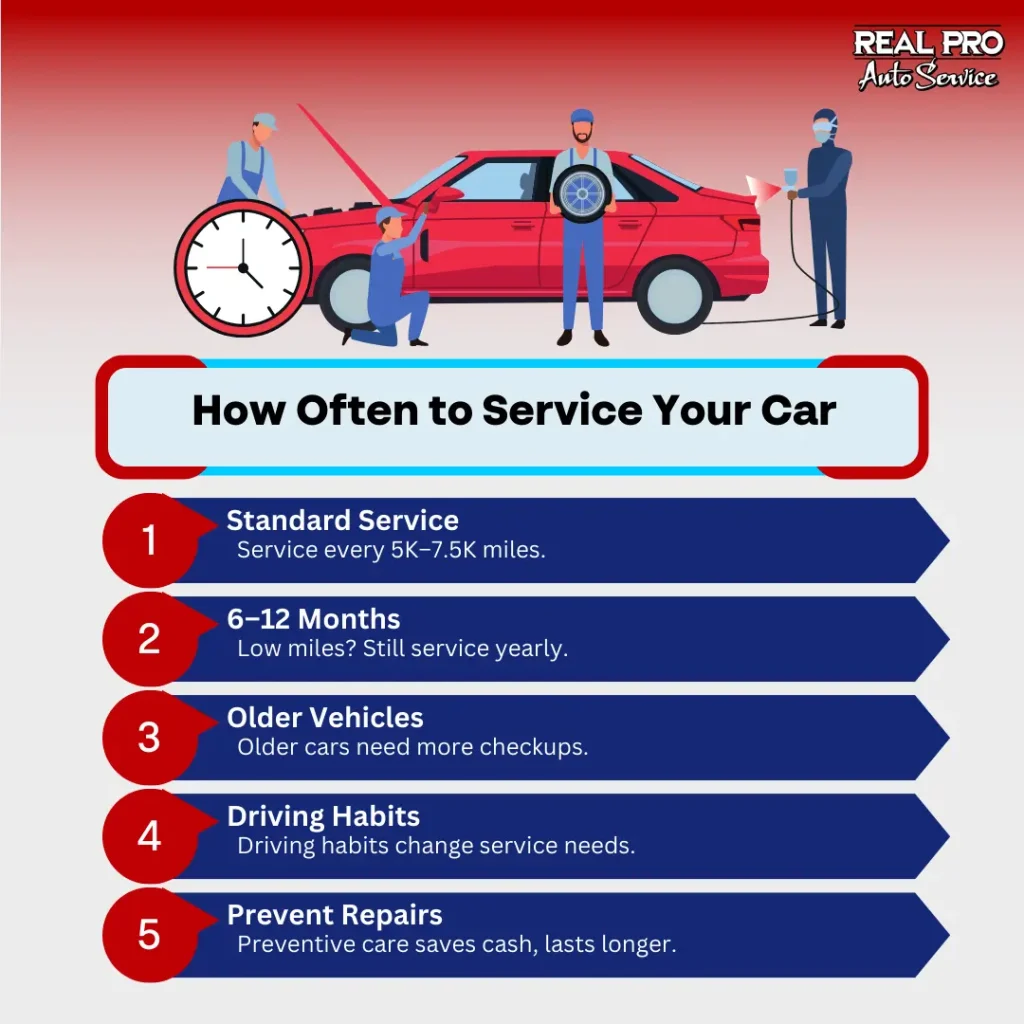
- Service your vehicle every 5,000 to 7,500 miles, or as specified in the owner’s manual for your make and model.
- Conduct time-based maintenance every six months to a year to address wear and tear.
- Adjust service frequency based on driving habits and conditions, such as stop-and-go traffic and rough roads.
- Older vehicles generally require more frequent servicing due to increased wear compared to newer models.
- Regular checkups help identify small problems early, preventing costly repairs and enhancing vehicle reliability.
Why Regular Vehicle Service Matters
Regular vehicle service is essential for keeping your car in top shape and extending its lifespan.
By staying on top of maintenance, you can prevent costly repairs down the road that might arise from neglect. Investing a little time and effort now can save you money and headaches later.
Extending the life of your car
Keeping your car in top shape can add years to its lifespan and save you money in the long run.
Regular maintenance helps catch potential issues before they escalate, allowing you to extend vehicle lifespan with service. Simple tasks like oil changes, tire rotations, and fluid checks can make a significant difference.
When you stay on top of these services, you’re not just enhancing performance; you’re also improving safety and reliability.
Plus, a well-maintained vehicle typically holds its value better, which is a bonus if you ever decide to sell.
By investing time and effort into regular service, you’re ensuring your car serves you reliably for many years to come.
Preventing costly repairs
Consistently servicing your vehicle can save you from unexpected and costly repairs down the line.
By following preventive auto maintenance tips, you can catch minor issues before they escalate into major problems. Regular oil changes, brake inspections, and tire rotations are just a few essential services that help maintain your vehicle’s health.
Ignoring these can lead to engine failure, brake malfunctions, or even transmission issues, all of which can be expensive to fix.
Additionally, keeping an eye on your vehicle’s fluid levels and filters guarantees peak performance.
By investing in routine maintenance, you’re not only enhancing your car’s lifespan but also protecting your wallet from hefty repair bills that could arise from neglect.
General Guidelines for Service Frequency
When it comes to servicing your vehicle, understanding the recommended intervals is essential. You’ll want to pay attention to both mileage-based schedules and time-based guidelines to keep everything running smoothly.
Let’s explore these general rules to guarantee your car gets the care it needs.
Standard mileage-based intervals
Most vehicle manufacturers recommend servicing your car every 5,000 to 7,500 miles, depending on the make and model. These recommended car service intervals are vital for keeping your vehicle in top shape.
Regular maintenance helps to identify potential issues before they become major problems, ensuring your safety and the longevity of your car.
It’s essential to check your owner’s manual for specific guidelines, as some vehicles may require more frequent servicing, especially if you drive in harsh conditions. By adhering to these mileage-based intervals, you can maintain peak performance and fuel efficiency.
Remember, staying on top of your vehicle’s service schedule not only protects your investment but also enhances your driving experience.
Time-based service schedules
While mileage is a crucial factor in determining when to service your vehicle, time-based service schedules also play an important role.
Even if you haven’t driven many miles, certain components can degrade over time. For example, fluids can break down, and rubber parts can deteriorate.
It’s generally recommended to follow time-based service schedules, usually every six months to a year, depending on your vehicle’s make and model. This helps guarantee that your car remains in peak condition and prevents potential issues.
Regular checkups can save you money in the long run by addressing small problems before they escalate.
So, don’t just rely on your odometer; keep an eye on the calendar too!
Factors That Affect How Often You Should Service Your Car
When it comes to servicing your car, several factors play a big role in determining how often you should go in.
Your driving habits, the conditions you drive in, and your vehicle’s age can all influence your service schedule. Plus, it’s essential to take into account the manufacturer’s recommendations for your specific make and model.
Driving habits and conditions
Your driving habits and the conditions you encounter can considerably influence how often you should service your vehicle.
If you frequently drive in stop-and-go traffic, navigate rough roads, or often carry heavy loads, you might need to schedule service more frequently. These driving habits can lead to increased wear and tear on your car.
On the other hand, if you mostly drive on highways or in ideal conditions, your vehicle may require less frequent maintenance.
Understanding the importance of regular vehicle service is essential; it helps identify potential issues before they become major problems.
By considering your unique driving habits and conditions, you can determine a service schedule that keeps your vehicle in peak condition.
Vehicle age and manufacturer recommendations
One of the key factors that affects how often you should service your car is its age, along with the manufacturer’s recommendations.
As vehicles age, their components may require more frequent checks and maintenance. It’s crucial to follow your manufacturer’s maintenance recommendations to keep your car running smoothly.
Here are a few things to take into account:
- Aged vehicles may require more frequent servicing because of the natural deterioration of their components.
- Newer models often have longer intervals between services, but don’t ignore scheduled maintenance.
- Manufacturer guidelines can vary considerably, so always consult your owner’s manual for specific advice.
Staying on top of these recommendations guarantees your vehicle remains reliable and safe, ultimately extending its lifespan.
Key Services to Keep Up With
To keep your vehicle running smoothly, there are some key services you shouldn’t overlook. Regular oil changes and fluid checks, tire rotations, and brake inspections are essential for maintaining performance and safety.
Additionally, don’t forget to keep an eye on your AC, belts, and battery to prevent unexpected breakdowns.
Oil changes and fluid checks
While regular oil changes and fluid checks might seem like simple tasks, they play an important role in maintaining your vehicle’s health and performance.
Keeping up with the regular oil change frequency helps prevent engine damage and guarantees smooth operation. It’s also vital to check other fluids to keep everything running efficiently.
Here are three key fluids to monitor:
- Engine Oil: Helps lubricate engine components and reduces wear.
- Coolant: Prevents overheating and protects the engine from corrosion.
- Brake Fluid: Essential for effective braking performance and safety.
Tire rotations and brake inspections
Regular tire rotations and brake inspections are essential for ensuring your vehicle’s safety and longevity. Keeping up with a tire rotation and alignment schedule helps evenly distribute tire wear, improving handling and extending tire life.
It’s generally recommended to rotate your tires every 5,000 to 7,500 miles, but you should always check your owner’s manual for specific guidelines.
Brake inspections are equally important; they help catch any issues early, preventing costly repairs down the line. Aim to have your brakes inspected at least once a year or if you notice any changes in performance.
By prioritizing these services, you’ll enhance your vehicle’s performance and safety, giving you peace of mind on the road.
AC, belts, and battery checks
Keeping your vehicle in top shape means paying attention to your AC, belts, and battery. Regular checks can prevent costly repairs and guarantee your car runs smoothly. Here’s what to focus on:
- AC System: Check refrigerant levels and inspect for leaks; ideally, this should be done every two years.
- Belts: Inspect for wear and tear during each service; replace them every 60,000 to 100,000 miles.
- Battery: Monitor performance and clean terminals; a typical battery lasts 3-5 years.
Be sure to follow a fluid check and replacement timeline to keep everything in order.
Staying on top of these components will not only enhance your vehicle’s lifespan but also improve your driving experience.
Signs Your Vehicle Needs Service Sooner
If your vehicle’s dashboard warning lights are on, it’s a sign you shouldn’t ignore. You might also notice unusual noises or changes in performance that indicate something’s not quite right.
Paying attention to these signs can help you address issues before they become major problems.
Warning lights on your dashboard
How can you tell when your vehicle needs urgent attention? One major indicator is the warning lights on your dashboard. These lights are critical signs your car needs servicing and shouldn’t be ignored.
Each light serves a specific purpose, alerting you to potential issues that could worsen if left unaddressed.
Here are a few common warning lights to watch for:
- Check Engine Light: This could indicate engine trouble or a minor issue.
- Oil Pressure Warning: Low oil pressure can lead to severe engine damage.
- Battery Light: A sign of potential battery or alternator problems.
If you see any of these lights, it’s time to schedule a service appointment. Don’t wait until it’s too late!
Unusual noises or performance changes
Sometimes, your vehicle might give off signs that it needs attention sooner than expected, especially through unusual noises or performance changes.
If you hear grinding, squealing, or clunking sounds, it’s a clear indicator something is wrong. These noises can stem from issues like worn-out brake pads or engine troubles, which shouldn’t be ignored.
Additionally, if you notice a decrease in acceleration or strange vibrations, it’s time to investigate further. Regular brake inspection intervals are essential to guarantee your braking system functions properly.
Don’t wait for these signs to escalate; addressing them early can save you money and keep you safe on the road. If you experience any of these symptoms, it’s best to consult a professional mechanic promptly.
Stay on Top of Maintenance with Real Pro Auto
Staying on top of your vehicle’s maintenance is essential for ensuring its longevity and performance, and at Real Pro Auto, you’re in good hands.
By adhering to a routine vehicle maintenance schedule, you can prevent costly repairs and keep your car running smoothly.
Here’s how Real Pro Auto can help:
- Expert Technicians: Our ASE-certified team knows the ins and outs of various makes and models.
- Transparent Service: We provide honest assessments and clear recommendations for your vehicle’s needs.
- Comprehensive Care: From engine diagnostics to brake inspections, we cover all aspects of auto maintenance.
Trust Real Pro Auto to keep your vehicle in top shape, allowing you to focus on what matters most—your journey.
Frequently Asked Questions
Can I Service My Vehicle Myself Instead of Going to a Shop?
You can service your vehicle yourself, but it depends on your skills and the tasks needed.
For complex issues or if you’re unsure, it’s often best to consult professionals like those at Real Pro Auto Service.
What Should I Do if I Miss a Scheduled Service?
If you’ve missed a scheduled service, don’t panic. Think of your vehicle as a garden; it needs care.
Schedule an appointment right away, and keep an eye on any warning signs to prevent bigger issues.
Does Vehicle Service Cost Vary by Location?
Yes, vehicle service costs can vary by location. Factors like local labor rates, parts availability, and the specific services needed influence pricing.
It’s always best to get quotes from nearby service providers for comparison.
How Can I Find a Trustworthy Service Center?
To find a trustworthy service center, ask for recommendations from friends or family, read online reviews, and check certifications. Look for transparency in pricing and services, ensuring the technicians have proper qualifications and experience.
Are There Any Warranties That Cover Vehicle Service?
“An ounce of prevention is worth a pound of cure.” Yes, many service centers offer warranties covering vehicle repairs, but it’s essential to read the fine print.
Always ask about warranty details before getting service.
What is included in a full car service?
A full car service is a comprehensive check-up that goes far beyond a basic oil change. While the exact list can vary between shops, it typically includes an oil and filter change, a new air filter, and new spark plugs.
A mechanic will also top off all essential fluids, such as coolant, brake fluid, and power steering fluid. The service includes a thorough inspection of the brakes, steering, and suspension systems to ensure they are in safe working order.
Additionally, a technician will check the tires for pressure and wear, inspect the battery and charging system, and examine all lights and wipers.
It is a complete health check designed to catch any potential issues before they become major problems, keeping your vehicle reliable and safe.
Is it cheaper to service your own car?
Servicing your own car can be cheaper, but it depends on your level of expertise and the complexity of the job.
For basic tasks like changing the oil, replacing the air filter, or swapping out wiper blades, doing it yourself can save you a significant amount on labor costs.
However, modern cars are increasingly complex, and many maintenance jobs require specialized tools and diagnostic equipment that most DIY mechanics do not own.
If you make a mistake, you could cause more damage and end up with a much larger repair bill than if you had gone to a professional.
For more involved tasks like brake work or suspension repairs, drivers in East Grand Rapids and surrounding communities will find it is often safer and more cost-effective in the long run to trust an experienced technician.
Conclusion
Regular vehicle service is not a task to be overlooked. It is a fundamental part of responsible car ownership that pays off in the long run.
By creating a maintenance schedule that suits your car and driving habits, you are investing in its health, safety, and longevity. You will avoid the stress of unexpected breakdowns and save money by catching small issues before they become expensive disasters.
A well-maintained car is a reliable car, giving you the freedom to drive with confidence. If you are unsure where to start or when your next service is due, the best next step is to consult your owner’s manual or speak with a trusted mechanic.
They can help you get on a path to better car care. For professional maintenance services, visit Real Pro Auto Service.