When to Change Your Differential Fluid
When it comes to car maintenance, fluids like engine oil and transmission fluid get most of the attention.
However, there’s another critical fluid that often gets overlooked: the differential fluid. The differential is a component in your car’s drivetrain that allows the wheels to spin at different speeds, which is essential for turning corners smoothly.
This set of gears requires proper lubrication to prevent wear and tear. Over time, the differential fluid breaks down and becomes contaminated with small metal particles.
If it’s not changed, this old fluid can lead to gear damage, unusual noises, and eventually, a pricey repair.
This guide will explain the importance of differential fluid, the signs that it needs to be changed, and the recommended service intervals to keep your car running smoothly.
Key Takeaways
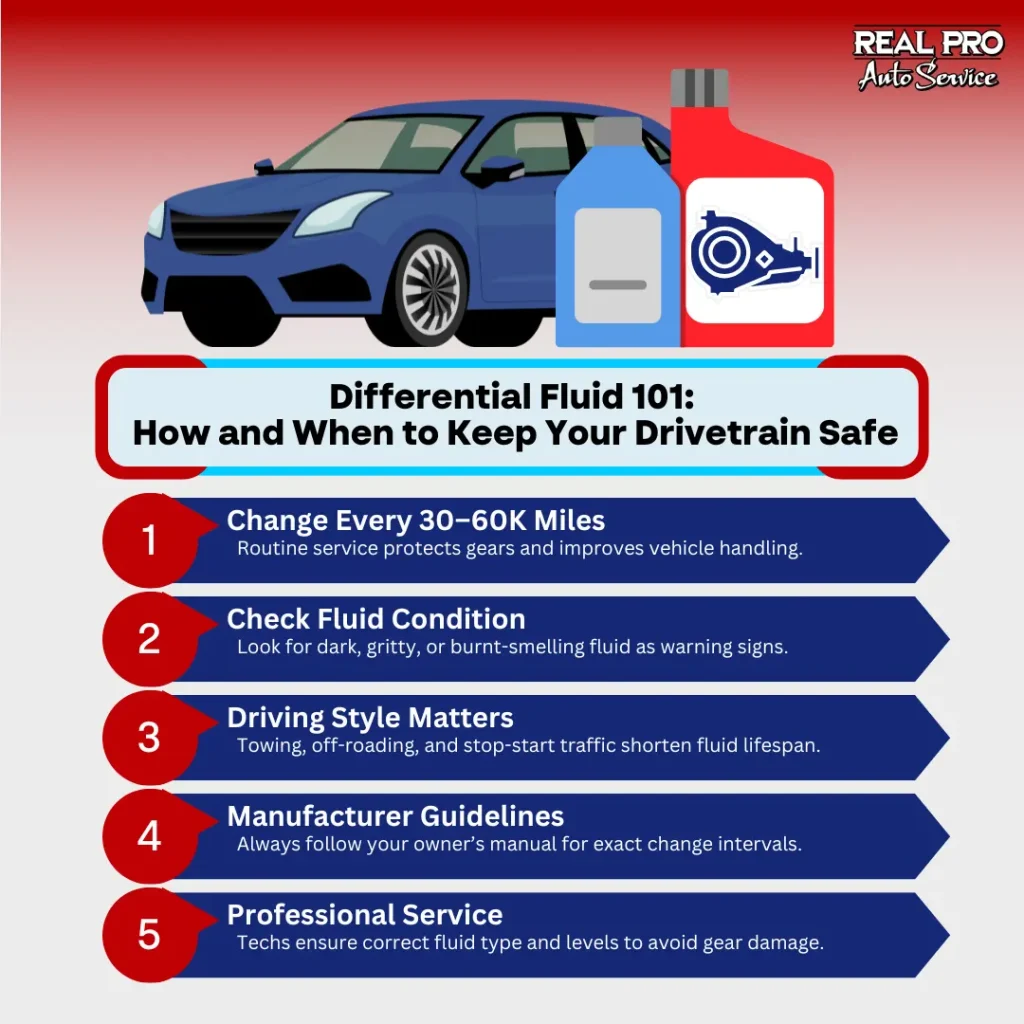
- Change differential fluid every 30,000 to 60,000 miles to maintain optimal performance and prevent wear.
- If you drive infrequently, consider changing the fluid every 2 to 3 years.
- Extreme driving conditions, like heavy towing or off-roading, may necessitate more frequent fluid changes.
- Look for signs like unusual noises, dark fluid, or gritty texture as indicators that it’s time to change the fluid.
- Consult your owner’s manual for specific recommendations tailored to your vehicle’s needs.
What Differential Fluid Does for Your Vehicle
Differential fluid plays an essential role in your vehicle’s performance.
It lubricates the gears, preventing wear and tear while ensuring smooth turning and efficient power transfer.
Understanding its importance can help you keep your vehicle running at its best.
Lubricating Gears and Preventing Wear
When it comes to your vehicle’s performance, maintaining the right differential fluid is essential for lubricating gears and preventing wear.
The differential fluid acts as a protective barrier, reducing friction between moving parts. Over time, this fluid can break down, losing its effectiveness and leading to increased wear on gears.
So, when should differential fluid be changed? It’s generally recommended to replace it every 30,000 to 60,000 miles, but always consult your vehicle’s manual for specific guidelines.
Regular changes not only extend the life of your differential but also enhance your vehicle’s overall performance.
By staying proactive about fluid maintenance, you can avoid costly repairs and keep your vehicle running smoothly for years to come.
Supporting Smooth Turning and Power Transfer
While you might not think about it often, the differential fluid plays an essential role in guaranteeing your vehicle’s wheels turn smoothly and power is effectively transferred from the engine to the ground.
This fluid helps to reduce friction and allows the gears within the differential to work seamlessly, especially during turns.
If the fluid becomes dirty or degrades over time, it can hinder performance, causing rough handling and inefficient power distribution.
Consequently, knowing when to change your differential fluid is vital. Regular maintenance not only enhances your vehicle’s handling but also prolongs the life of the differential components.
Keep an eye on your service intervals and consult your owner’s manual to guarantee peak performance on the road.
Signs It’s Time to Change Your Differential Fluid
If you start hearing unusual noises or feel vibrations while turning, it might be time to check your differential fluid.
Dark, dirty fluid or a burning smell are also clear signs that your vehicle needs attention.
Being mindful of these symptoms can help avoid more serious problems in the long run.
Unusual Noises or Vibrations While Turning
Hearing unusual noises or feeling vibrations when you turn can be alarming, especially since these symptoms often signal that it’s time to change your differential fluid.
If you notice grinding, whining, or clunking sounds, it’s a clear indication that something isn’t right.
These noises can result from low or contaminated fluid, which affects the differential’s ability to function smoothly.
Dark, Dirty Fluid or a Burning Smell
Unusual noises or vibrations are often the first signs that your differential fluid needs attention, but visual cues can be just as telling.
If you notice dark, dirty fluid or a burning smell, it’s time to take action.
Here are three key indicators that you shouldn’t ignore:
- Color: Fresh differential fluid is typically a clear or light amber color. Dark fluid indicates contamination or breakdown.
- Consistency: If the fluid feels gritty or has metallic particles, it’s a sign of wear and potential damage.
- Odor: A burning smell can suggest overheating or degradation of the fluid, leading to serious issues.
Paying attention to these signs can help you avoid costly repairs down the road.
Manufacturer Recommendations for Fluid Changes
When it comes to changing your differential fluid, it’s essential to follow your manufacturer’s recommendations.
These guidelines typically include specific mileage and time intervals for fluid changes, which can vary based on your vehicle.
Additionally, certain driving conditions may necessitate more frequent changes, so it’s important to stay informed.
Mileage and Time Intervals to Keep in Mind
While it may seem easy to overlook, paying attention to your vehicle’s differential fluid change intervals is essential for maintaining ideal performance. So, when should you change your differential fluid? Here are some guidelines to keep in mind:
- Mileage: Most manufacturers recommend changing the fluid every 30,000 to 60,000 miles, depending on your vehicle’s make and model.
- Time: If you don’t often drive, consider changing the fluid every 2 to 3 years, as fluid can degrade over time.
- Driving Conditions: If you frequently drive in extreme conditions (heavy towing or off-roading), you may need to change the fluid sooner.
Staying on top of these intervals will help guarantee your differential operates smoothly and efficiently.
Factors That May Require More Frequent Changes
If you’re driving a vehicle that sees heavy use or operates under challenging conditions, you might need to change your differential fluid more often than the standard recommendations.
Factors like towing heavy loads, driving in extreme temperatures, or frequently traversing rough terrains can accelerate fluid breakdown.
If you’re frequently off-roading or making short trips, the fluid can also heat up and degrade faster. So, how often should you change your differential fluid?
It’s wise to consult your vehicle’s owner manual and adjust intervals based on these conditions.
Professional differential repair at our shop in Grand Rapids can service your differential and prevent costly damage.
Importance of Professional Differential Service
When it comes to maintaining your vehicle’s differential, professional service is essential. You want to guarantee that the right fluid type and fill levels are used to avoid costly gear and bearing damage.
By trusting experts, you can keep your differential running smoothly and extend its lifespan.
Ensuring Proper Fluid Type and Fill Levels
Ensuring the correct fluid type and proper fill levels in your vehicle’s differential is crucial for optimal performance and longevity.
Knowing how to check these factors can prevent costly repairs down the line.
Here’s how to guarantee you’re on the right track:
- Consult Your Owner’s Manual: Always refer to the manufacturer’s specifications for the correct fluid type.
- Regular Checks: Periodically inspect the differential fluid level to guarantee it’s filled to the recommended level.
- Look for Signs: Be aware of unusual noises or handling issues, which may indicate it’s time to change the differential fluid.
Protect Your Drivetrain with Real Pro Auto’s Differential Service
If your differential fluid is overdue, you’re risking serious gear and bearing damage that could lead to expensive repairs.
At Real Pro Auto Service, our certified technicians are equipped to handle your vehicle’s specific needs—whether it’s a routine fluid change or a full inspection of the drivetrain system.
We use manufacturer-recommended fluids and ensure proper fill levels to help you avoid breakdowns and extend the life of your differential.
Don’t leave it to chance—schedule a differential service with Real Pro Auto today and drive with confidence knowing your vehicle is in expert hands.
Frequently Asked Questions
How Often Should I Check My Differential Fluid Levels?
You should check your differential fluid levels regularly, ideally every 30,000 miles or during routine maintenance.
Keeping an eye on fluid levels helps guarantee your vehicle runs smoothly and can prevent costly repairs down the line.
Can I Change Differential Fluid Myself?
Yes, you can change differential fluid yourself if you have the right tools and knowledge.
Just make certain you follow proper procedures, use the correct fluid type, and dispose of the old fluid responsibly.
What Are the Costs Associated With Differential Fluid Change?
The costs associated with a differential fluid change can vary, but you’re typically looking at $100 to $200.
Factors like your vehicle type and labor rates in your area can influence the final price.
Does Driving Style Affect Differential Fluid Lifespan?
Aggressive driving can shorten your differential fluid’s lifespan, while smooth, cautious driving helps it last longer.
So, if you’re constantly accelerating hard or making sharp turns, you might need to change it sooner than expected.
What Happens if I Neglect Changing Differential Fluid?
If you neglect changing your differential fluid, it can lead to increased friction, overheating, and potential gear failure.
This might result in costly repairs and decreased vehicle performance, so it’s best to stay on top of maintenance.
What are the symptoms of low differential fluid?
Low differential fluid can cause several noticeable symptoms. The most common symptom is a whining or howling noise coming from the front or rear of the vehicle, which intensifies as you accelerate or decelerate.
You might also hear a grinding or rumbling sound, especially when turning, as the gears are not being properly lubricated and are making metal-on-metal contact.
In more severe cases, you may feel vibrations through the floor of the car or notice a burning smell, which is a sign that the differential is overheating due to excessive friction.
If you experience any of these symptoms, it’s crucial to have your differential fluid level checked immediately to prevent permanent damage to the gears and bearings.
What happens if you never change differential fluid?
If you never change your differential fluid, it will eventually break down and become contaminated with metal shavings from the gears.
This old, dirty fluid loses its ability to lubricate effectively, leading to a significant increase in friction and heat within the differential.
This will cause the gears and bearings to wear out prematurely. Over time, this can lead to a complete failure of the differential, which is a pricey repair.
You’ll likely experience a progression of symptoms, starting with whining and grinding noises, and potentially ending with the differential seizing up completely, which could leave you stranded.
Regular fluid changes are a small, inexpensive bit of maintenance that can prevent a major mechanical failure.
Conclusion
While it may not be the most talked-about fluid in your car, differential fluid is essential for the health and longevity of your drivetrain.
Paying attention to your vehicle’s maintenance schedule and being aware of the signs of old or low fluid—like strange noises or vibrations—can save you from a major headache and a costly repair bill.
A differential fluid change is a simple, preventative service that ensures your car’s gears are properly lubricated and protected.
Suppose you’re unsure about the condition of your fluid or when it was last changed. In that case, a quick inspection by a professional can provide peace of mind and keep your car turning smoothly for years to come.
For drivers in communities like East Grand Rapids, staying on top of all fluid changes is key to vehicle longevity.
When it’s time for a differential service or any other maintenance, you can trust the experts at a professional Grand Rapids auto shop.