
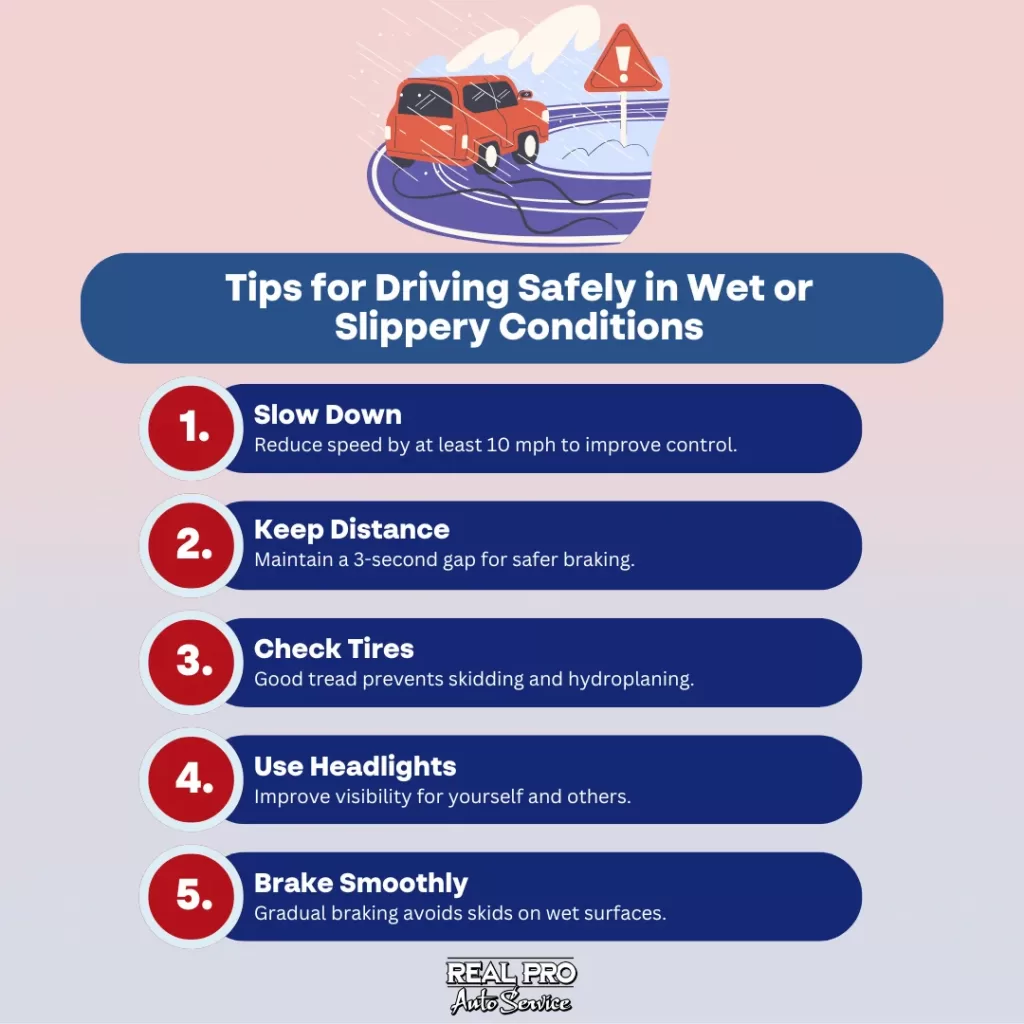
Tips for Driving Safely in Wet or Slippery Conditions
Driving in wet or slippery conditions presents a unique set of challenges that every driver needs to be prepared for.
Rain, snow, and ice dramatically reduce the traction between your tires and the road, which can lead to a loss of control. Your ability to steer, brake, and accelerate is compromised, and the risk of an accident increases significantly.
However, with the right knowledge and techniques, you can navigate these conditions safely. It all comes down to being a more deliberate and cautious driver.
This guide will provide you with essential tips for handling wet and slippery roads, from adjusting your speed and following distance to ensuring your vehicle is adequately equipped for the weather.
By adopting these practices, you can drive with greater confidence and safety, no matter what the forecast holds.
Key Takeaways
- Reduce your speed by at least 10 mph in wet conditions to enhance stopping distance and reaction time.
- Maintain a three-second following distance from the vehicle ahead to allow for sudden stops.
- Choose tires with deep treads and suitable rubber compounds for better traction on slippery surfaces.
- Use smooth driving techniques, such as gradual acceleration and braking, to minimize the risk of skidding.
- Ensure visibility by using headlights and maintaining wipers in good condition during rain.
Slow your roll
When driving in wet conditions, it is crucial to slow down—ideally, reduce your speed by at least 10 mph. Speeding increases your stopping distance, making it harder to react to sudden changes.
When driving in slippery conditions, remember that traction is limited, so take curves and turns more gently. You’ll want to avoid abrupt movements; instead, make smooth, gradual adjustments to your steering and braking.
If you hit a patch of water, stay calm and resist the urge to slam on the brakes. Instead, lightly ease off the gas and steer straight.
Knowing what to do when driving on slippery roads can save you from skidding or losing control. Stay alert, and don’t let the rain create a false sense of security.
Maintain a safe distance
A good rule of thumb is to keep at least a three-second gap between your vehicle and the one in front of you during wet conditions.
This distance is essential when you’re driving on slippery roads, as it allows you ample time to react if the vehicle ahead suddenly stops or slows down.
In wet weather, your stopping distance increases considerably, and having that buffer can make all the difference.
If you find yourself tailgating, the risk of hydroplaning or losing control rises dramatically. So, always be aware of your surroundings and adjust your distance accordingly.
Remember, staying safe on the road is more important than arriving at your destination quickly. Keep that safe distance, and you’ll drive more confidently in challenging conditions.
Choose tires carefully
Choosing the right tires can significantly impact your safety on wet roads.
When you’re driving in icy conditions, it’s essential to choose tires carefully to enhance traction and control.
Look for tires specifically designed for wet and slippery surfaces, as they often feature deeper treads and special rubber compounds that grip the road better.
All-season tires can be a good option, but if you frequently encounter harsh winter weather, consider investing in dedicated winter tires.
These tires are engineered to perform effectively in cold temperatures, providing better handling and shorter stopping distances.
Remember, your tires are your only contact with the road, so prioritize quality and suitability for the conditions you face. Safe driving starts with the right tires!
Properly maintain your tires
Properly maintain your tires to guarantee your safety while driving in wet conditions.
Regularly check your tire pressure, as under-inflated tires can reduce traction and increase the risk of hydroplaning.
Make sure your tires have adequate tread depth; worn-out tires can’t channel water away effectively, making it harder to grip the road.
Rotate your tires every 5,000 to 7,500 miles to promote even wear. Additionally, inspect them for any visible damage, such as cuts or bulges, that could compromise performance.
Don’t forget to align your tires if you notice uneven wear or if your car pulls to one side.
By taking these steps, you’ll not only extend the life of your tires but also enhance your safety in wet driving conditions.
Go smoothly
Driving smoothly is essential when traversing wet roads. When you’re driving on a highway in slippery road conditions, you need to maintain a steady speed and avoid sudden movements.
Quick acceleration or sharp turns can lead to loss of traction, making it harder to control your vehicle. Instead, gently ease into the accelerator and brake to minimize skidding.
What should a driver do when driving in slippery road conditions? Focus on smooth steering and gradual adjustments. Keep a safe distance from the vehicle ahead, allowing plenty of time to react.
Remember, patience is key; don’t rush. By staying calm and driving smoothly, you’ll enhance your safety and the safety of others on the road.
Avoid hydroplaning
When rain saturates the road, it creates the perfect conditions for hydroplaning, which can catch even the most cautious drivers off guard.
When driving on slippery roads, you should take these precautions to minimize the risk:
- Check your tires: Verify your tires have adequate tread depth and proper inflation, as they play a vital role in maintaining traction.
- Reduce your speed: Slowing down helps maintain control and reduces the chance of losing grip on wet surfaces.
- Avoid sudden movements: Make gradual turns and gentle stops to prevent skidding.
Plan your braking
Maintaining control while driving in wet conditions requires careful planning of your braking.
When driving on a slippery surface, your stopping distance can increase considerably, so it’s crucial to give yourself more time and space.
Start braking earlier than you usually would, and apply pressure gradually. This prevents your wheels from locking up, leading to skidding.
If you find yourself driving in icy conditions, remember that even a slight tap on the brakes can cause your vehicle to lose traction. Instead, focus on using your engine to slow down by shifting to a lower gear.
By planning your braking effectively, you’ll enhance your safety and maintain better control over your vehicle in challenging weather.
Turn on your lights
As rain begins to fall, it’s essential to turn on your lights, not just for your visibility but also to help others see you.
When you are driving on a highway in slippery road conditions, having your lights on can make a significant difference.
Here are three key reasons to remember:
- Enhanced Visibility: Your lights help you see the road and any obstacles more clearly.
- Increased Safety for Others: When you’re visible, other drivers can better anticipate your movements.
- Legal Requirements: In many areas, it’s mandatory to use headlights in adverse weather conditions.
Knowing how to drive in slippery conditions includes using your lights effectively. Don’t underestimate their importance for safe driving!
Check your wipers
Having your lights on is just the start of ensuring safety in wet conditions; checking your wipers is just as important. When you’re driving on a highway in slippery road conditions, your visibility can quickly diminish.
Worn-out or ineffective wipers can make it tough to see, increasing the risk of accidents.
Always inspect your wipers for any signs of wear and replace them if they’re streaking or skipping. This is essential when driving in icy or snowy conditions, where clear visibility is imperative.
If your vehicle starts to skid, you’ll need every advantage to regain control, and good wipers can make all the difference.
Keep your wipers in top shape to navigate safely through any weather.
Frequently Asked Questions
How Can I Prepare My Car for Rainy Weather?
To prepare your car for rainy weather, check your tires’ tread depth, verify wiper blades aren’t worn, top off windshield washer fluid, and inspect brakes for responsiveness. Regular maintenance can help keep you safe during storms.
What Should I Do if I Start to Hydroplane?
If you start to hydroplane, don’t panic. Ease off the accelerator, keep the steering wheel steady, and avoid sudden movements.
Once you regain control, gently steer in the direction you want to go.
Are All-Season Tires Suitable for Heavy Rain?
All-season tires can handle light to moderate rain, but they’re not always ideal for heavy downpours.
Consider dedicated wet-weather tires for improved traction and safety in such conditions.
How Often Should I Replace My Windshield Wipers?
You should replace your windshield wipers every six to twelve months, or sooner if you notice streaking or skipping.
Keeping them in good condition guarantees clear visibility during rain and enhances your overall driving safety.
What Are the Signs of Poor Tire Traction?
Have you ever noticed your vehicle slipping during turns? Signs of poor tire traction include uneven wear, low tread depth, vibrations, and increased stopping distances.
Regular inspections can help identify these issues before they become dangerous.
What is the 3-second rule in driving?
The three-second rule is a simple and effective way to ensure you are maintaining a safe following distance from the vehicle in front of you.
To use it, watch as the vehicle ahead passes a fixed object on the side of the road, such as a sign, tree, or overpass. Then, start counting ‘one-one thousand, two-one thousand, three-one thousand.’
If you pass the same object before you finish counting to three, you are following too closely and need to increase your distance.
This rule is designed to give you enough time and space to react and brake safely if the car in front of you stops suddenly.
In wet or slippery conditions, it’s recommended to extend this to a four or five-second rule to account for the increased stopping distance.
What is the first thing to do when your car starts to skid?
The first and most important thing to do when your car starts to skid is to stay calm and not panic.
Your immediate instinct might be to slam on the brakes, but this is often the worst thing you can do, as it can lock the wheels and make the skid worse. Instead, take your foot off the accelerator and the brake.
Then, look and steer in the direction you want the car to go. For example, if the rear of your car is sliding to the right, you should steer to the right to correct it. Make your steering adjustments smoothly and gently.
As you feel the car start to regain traction, you can gently apply the brakes or accelerator as needed.
The key is to make smooth, deliberate movements rather than sudden, jerky reactions.
Conclusion
Driving in wet or slippery conditions demands your full attention and a more cautious approach.
By reducing your speed, increasing your following distance, and making smooth, deliberate movements, you can significantly reduce your risk of losing control.
It’s also crucial to ensure your vehicle is prepared for the weather, with good tires, effective wipers, and working headlights.
Remember that the goal is to arrive at your destination safely, not quickly. By respecting the conditions and adjusting your driving accordingly, you can handle even the most challenging weather with confidence.
For drivers in communities like East Grand Rapids, where the weather can change quickly, these tips are especially important.
If you’re unsure about your vehicle’s condition, a professional car repair at our Grand Rapids shop can provide a thorough inspection.