
The Impact of Driving Habits on Tire Wear: What You Should Know
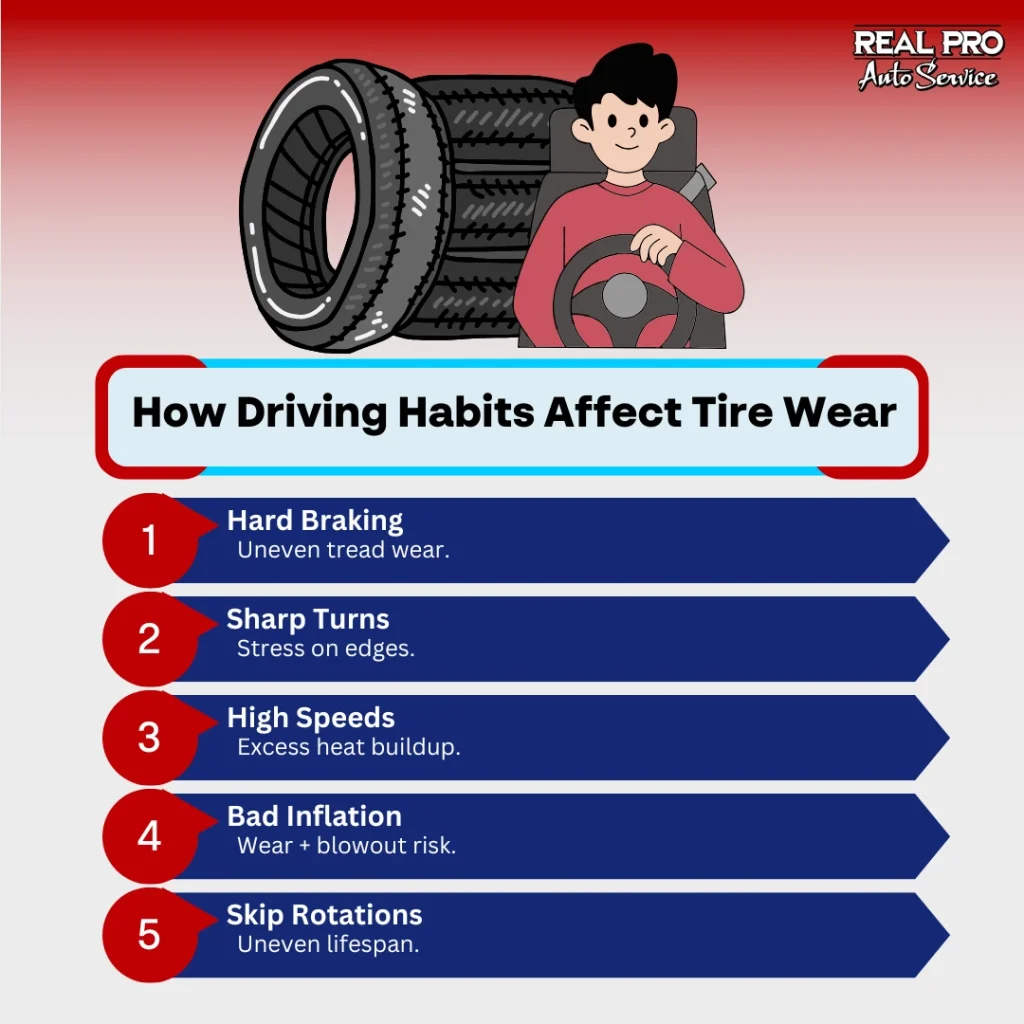
Your driving habits have a big impact on how long your tires last. If you brake hard, speed up too fast, or take sharp turns, your tires wear out faster. Driving too fast creates extra heat that weakens the rubber, and not keeping your tires properly inflated makes the problem worse. Even rough roads and potholes can cause uneven wear. By driving smoothly and taking care of your tires, you can make them last much longer.
Key Takeaways
- Aggressive driving, including hard braking and rapid acceleration, accelerates tire tread wear and leads to uneven tire lifespan.
- High speeds generate excess heat, increasing friction and causing quicker tire degradation and uneven wear patterns.
- Regular tire maintenance, such as pressure checks and rotations, is crucial for preventing premature wear and ensuring optimal performance.
- Driving on rough roads or making abrupt maneuvers can significantly damage tires and lead to uneven wear.
- Professional inspections and proper alignment are essential for extending tire life and improving handling and fuel efficiency.
How Aggressive Driving Accelerates Tire Wear
Aggressive driving can really take a toll on your tires. When you frequently brake hard and accelerate suddenly, you’re increasing the wear on your tire tread. Plus, taking sharp turns at high speeds adds extra stress, leading to quicker deterioration.
Hard braking and sudden acceleration
When you frequently engage in hard braking and sudden acceleration, your tires take the brunt of the impact. This aggressive driving style leads to harsh braking and tire damage, causing uneven wear that shortens their lifespan. Each time you slam on the brakes or stomp on the gas, your tires experience excessive stress, resulting in a loss of tread and traction. You might not notice it immediately, but over time, this wear can compromise your vehicle’s performance and safety. To extend the life of your tires, consider adopting smoother driving habits, like gradual acceleration and gentle braking. This not only helps your tires but can also improve fuel efficiency, saving you money in the long run.
Fast cornering and sharp turns
Fast cornering and sharp turns can considerably impact your tires, especially if you’re driving at high speeds. When you take corners aggressively, the aggressive cornering effects put extra stress on your tire tread. This leads to uneven wear, reducing their lifespan and compromising your vehicle’s handling. You might notice increased wear on the outer edges of your tires, as they bear the brunt of the force during sharp turns. Additionally, this driving habit can cause overheating, which further accelerates tire degradation. To preserve your tires, consider easing up on those sharp turns and taking corners more smoothly. It’s a small adjustment that can save you money and enhance your vehicle’s performance over time.
The Effect of Speed on Your Tires
When you drive at high speeds, your tires generate excess heat, which can lead to quicker wear and tear. This added heat not only affects the tread but also shortens the overall lifespan of your tires. Understanding this relationship can help you make smarter choices on the road.
Why high speeds generate excess heat
Although many drivers enjoy the thrill of high speeds, they may not realize that this excitement comes at a cost—excess heat generated in the tires. When you’re speeding, the increased friction between the tires and the road surface raises the temperature of your tires considerably. This heat buildup can weaken the tire materials, leading to potential tire damage. The faster you drive, the more heat is produced, which can cause the rubber to break down faster and increase the risk of blowouts. Additionally, the air pressure in your tires can rise, affecting their performance. To keep your tires in good shape, it’s crucial to be mindful of your speed and drive within safe limits to prevent unnecessary wear and tear.
How does driving fast shorten tire lifespan?
Driving at higher speeds can considerably shorten your tires’ lifespan, as the increased velocity intensifies the wear and tear on the rubber. Your driving style plays a significant role in how quickly your tires wear down. When you drive fast, here’s what happens:
- Increased heat: Higher speeds generate more friction, leading to excessive heat, which can degrade tire material.
- Reduced traction: Speeding affects your tires’ grip on the road, leading to uneven wear patterns.
- Frequent replacements: Faster driving means you’ll need to replace your tires more often, adding to your overall vehicle maintenance costs.
Improper Tire Care and Habits
Improper tire care can greatly affect your vehicle’s performance and safety. If you’re driving with underinflated or overinflated tires, or if you skip regular tire rotations, you may face uneven wear and reduced traction. Let’s explore how these habits can impact your tires and overall driving experience.
Driving with underinflated or overinflated tires
When you neglect proper tire inflation, you not only compromise your vehicle’s performance but also increase the risk of premature tire wear. Driving with underinflated tires can lead to excessive heat buildup, while overinflated tires can result in a harsher ride and reduced traction. Understanding the differences between overinflated and underinflated tires is key to maintaining your vehicle.
- Underinflated tires can wear unevenly and decrease fuel efficiency.
- Overinflated tires may cause a bumpy ride and increase the likelihood of blowouts.
- Regularly checking your tire pressure can enhance safety and extend tire life.
Keeping your tires properly inflated guarantees maximal performance and longevity, making your driving experience safer and more enjoyable.
Skipping regular tire rotations
If you’re neglecting regular tire rotations, you could be setting yourself up for uneven tire wear and reduced performance. When tires aren’t rotated consistently, the front and rear tires wear differently, leading to premature replacements and potentially unsafe driving conditions. Regular tire rotation benefits your vehicle by promoting even tread wear, extending tire life, and enhancing fuel efficiency. It also improves handling and traction, ensuring a smoother ride. Skipping this essential maintenance can result in costly repairs down the line, not to mention the risk of blowouts or decreased control while driving. To keep your tires in top shape and maintain peak performance, make tire rotations a priority in your vehicle maintenance routine.
Road Conditions and Driving Style
When you’re driving on rough roads or maneuvering around potholes, your tires take a significant hit. City stop-and-go traffic can also wear them down faster compared to smooth highway cruising. Understanding how these conditions affect your tires can help you make smarter driving choices.
Rough roads, potholes, and uneven surfaces
Driving on rough roads, with their potholes and uneven surfaces, can greatly impact your vehicle’s tire wear. These challenging road conditions can cause tires to wear unevenly, leading to costly replacements. It’s essential to be aware of how your driving style on such surfaces can affect your tires.
- Avoid sudden turns and hard braking.
- Keep your tires properly inflated.
- Regularly inspect for damage and wear.
City stop-and-go vs. highway driving
While city driving often involves frequent stops and starts, highway driving typically allows for a more consistent speed, which can greatly influence tire wear. In the city, abrupt braking and accelerating can lead to uneven tire wear, particularly on the front tires. This constant shifting can also exacerbate tire alignment issues, causing your tires to wear out faster than they should. On the other hand, highway driving promotes smoother changes and less stress on your tires, helping them last longer. If you find yourself primarily driving in the city, consider regular tire rotations and alignment checks to combat these effects. Ultimately, understanding your driving habits can help you maintain your tires and improve their lifespan.
Protect Your Tires with Professional Care at Real Pro Auto
To guarantee your tires last longer and perform at their best, regular professional care is essential. At Real Pro Auto, we specialize in preventive tire maintenance that keeps your tires in top shape. Our ASE-certified technicians provide the expertise needed to address any issues before they become costly problems.
Regular professional care is vital for tire longevity and performance; trust our ASE-certified technicians at Real Pro Auto for preventive maintenance.
Here’s how we protect your tires:
- Regular inspections: We check for uneven wear and damage.
- Proper alignment and balancing: This helps extend tire life and improve handling.
- Tire rotations: We assure even wear across all tires.
Frequently Asked Questions
How Often Should I Rotate My Tires?
You should rotate your tires every 5,000 to 7,500 miles, or as recommended by your vehicle’s manufacturer. Regular rotations help guarantee even wear, prolonging tire life and improving your vehicle’s handling and safety.
What Is the Ideal Tire Pressure for My Vehicle?
The ideal tire pressure for your vehicle typically ranges between 30 to 35 PSI. Check your owner’s manual or the sticker on the driver’s door for the exact specifications, and don’t forget to monitor it regularly.
Can Tire Alignment Affect Tire Longevity?
Yes, tire alignment can greatly affect tire longevity. If your tires aren’t aligned properly, they’ll wear unevenly, leading to premature replacement. Regular alignment checks can help guarantee your tires last as long as possible.
How Do I Know When to Replace My Tires?
You should replace your tires when the tread depth is below 2/32 of an inch, you notice uneven wear, or if you see visible damage like cracks or bulges. Regular inspections can help you stay on top of this.
What Impact Does Load Weight Have on Tire Wear?
Load weight greatly impacts tire wear. Heavier loads increase friction and heat, leading to faster deterioration. If you overload your vehicle, you’ll notice uneven tread wear and reduced lifespan. So, be mindful of what you carry!
Conclusion
In the context of driving, the habits you develop play a significant role in how long your tires last. Adopting simple practices such as accelerating gently, braking carefully, and performing regular vehicle maintenance can make a noticeable difference. These actions help reduce tire wear and improve overall vehicle performance, leading to fewer replacements and lower costs over time. Consistently applying these habits not only contributes to better tire longevity but also to safer and more efficient driving. Making these small adjustments in your driving routine can result in a more durable vehicle and a smoother, more reliable journey in the long run.