The Best Way to Drive With a Full Load Without Overloading
Whether you are packing up for a family road trip, moving to a new apartment, or hauling supplies for a weekend project, loading up your car with much stuff is a common task.
However, many drivers do not realize that there is a right way and a wrong way to do it. Driving with a full load is not just about fitting everything in; it is about doing so safely and without damaging your vehicle.
Overloading your car or distributing the weight improperly can lead to serious problems, including reduced handling, increased braking distances, and even tire blowouts. The key is to understand your vehicle’s limits and to load your cargo strategically.
This guide will provide you with practical tips on how to drive with a full load the smart way, ensuring your journey is safe and your car stays in great shape.
Key Takeaways
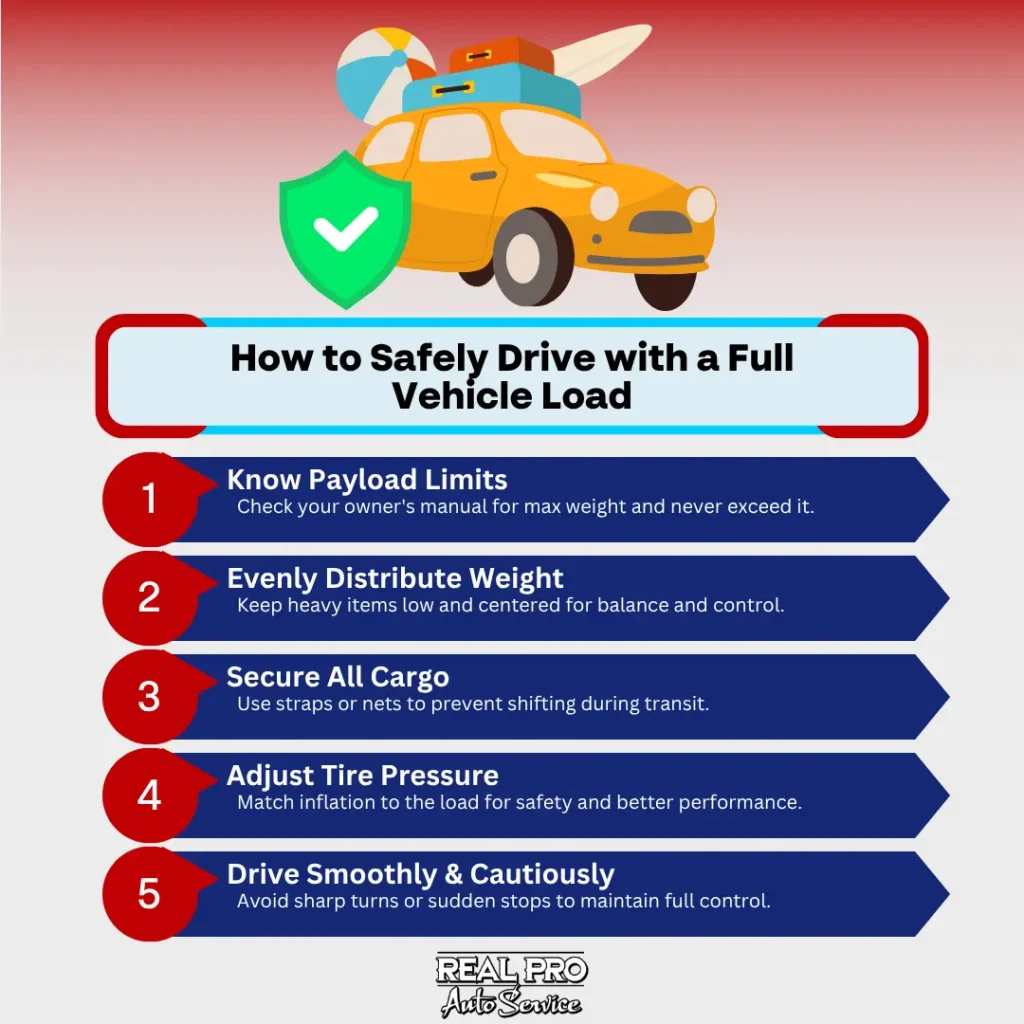
- Check your vehicle’s owner’s manual for the maximum payload capacity to avoid overloading.
- Distribute weight evenly to maintain vehicle stability and control during transit.
- Secure all items with nets or straps to prevent shifting while driving.
- Adjust tire pressure according to the added load for enhanced safety and performance.
- Drive cautiously, avoiding sudden maneuvers, to maintain control with a full load.
Check Your Vehicle’s Payload Capacity
Before you hit the road with a full load, it’s essential to check your vehicle’s payload capacity. Knowing the weight your car can safely carry will help you avoid the adverse effects of overloading a vehicle, such as reduced handling, increased stopping distance, and potential tire blowouts.
So, how can we prevent overloading? Start by consulting your owner’s manual for the maximum payload specifications. Then, weigh your cargo to guarantee it stays within limits.
Remember, a fully loaded car may seem manageable, but exceeding the capacity can lead to serious safety risks.
By being mindful of your vehicle’s limits, you’ll guarantee a smoother, safer journey for yourself and others on the road.
Distribute Weight Evenly Across the Vehicle
Properly distributing weight across your vehicle is essential for maintaining stability and control while driving with a full load.
When you have a fully loaded car, it’s important to place heavier items low and towards the center of the vehicle. This helps lower the center of gravity and keeps your car balanced.
Avoid overloading any one side, as this can lead to dangerous handling and increased tire wear. Instead, distribute weight evenly from front to back and side to side. You’ll want to make sure that no single area is carrying too much weight, enabling better braking and steering response.
By taking these steps, you’ll enhance your driving safety and improve your overall experience on the road.
Secure All Items to Prevent Shifting
Securing all items in your vehicle is essential when driving with a full load. In a fully loaded car, loose items can shift during transit, leading to potential hazards.
Overloading a car may result in one of the following issues: impaired handling, increased stopping distances, or even damage to your vehicle. To prevent these issues, make sure everything is tightly packed and secured.
Use cargo nets, straps, or tie-downs to hold items in place. Don’t forget to check that your load doesn’t exceed the vehicle’s capacity.
So, how do you avoid overloading your vessel? Regularly assess your load and remove unnecessary items. This way, you’ll drive safely, maintain control, and enjoy a smoother journey without worrying about shifting cargo.
Adjust Tire Pressure for the Added Load
Once you’ve secured all items in your vehicle, the next step is to adjust the tire pressure to accommodate the added load.
When your car’s fully loaded, it’s essential to guarantee that your tires can handle the weight. Check your owner’s manual for the recommended tire pressure for a fully loaded car; this is often higher than the standard setting. Proper tire pressure helps maintain control and stability, reducing the risk of blowouts.
So, how can overloading be avoided? Knowing the definition of a car’s full capacity will help you estimate the weight you’re transporting and make necessary adjustments.
Keeping your tires inflated correctly will enhance safety and performance on the road.
Drive Cautiously and Avoid Sudden Maneuvers
As you hit the road with a full load, driving cautiously becomes essential to secure your safety and that of others.
When you’re in a fully loaded car, it’s vital to avoid sudden maneuvers, as these can lead to loss of control. A car fully loaded with cargo may handle differently, making sharp turns or abrupt stops risky. Remember, overloading can badly affect your vehicle’s stability and braking distance.
Keep a safe distance from other vehicles and adjust your speed according to road conditions. Smooth acceleration and gradual braking will help maintain control.
By driving cautiously and being mindful of your load, you can guarantee a safer journey for yourself and everyone sharing the road.
Frequently Asked Questions
How Can I Find My Vehicle’s Payload Capacity?
To find your vehicle’s payload capacity, check the owner’s manual or the manufacturer’s website. You can also look for a sticker inside the driver’s door jamb that lists the Gross Vehicle Weight Rating (GVWR).
What Items Should I Avoid Loading in My Vehicle?
Imagine packing your suitcase for a vacation; overloading it makes it hard to carry. Similarly, avoid loading sharp objects, heavy machinery, or flammable materials in your vehicle, as they can compromise safety and performance.
Can I Exceed My Vehicle’s Payload Capacity Temporarily?
You shouldn’t exceed your vehicle’s payload capacity, even temporarily. Doing so can strain your vehicle, reduce handling, and increase the risk of accidents.
Always prioritize safety and adhere to manufacturer guidelines for peak performance.
What Are the Risks of Overloading My Vehicle?
Overloading your vehicle is like playing with fire; it can lead to serious risks. You’ll face reduced handling, increased tire wear, and potential brake failure, compromising your safety and that of others on the road.
How Does Overloading Affect My Vehicle’s Fuel Efficiency?
Overloading your vehicle can considerably decrease fuel efficiency. When you exceed weight limits, the engine works harder, burning more fuel. It’s essential to stay within limits to maintain ideal performance and save on fuel costs.
Where is the safest place to put heavy items in a car?
The safest place to put heavy items in a car is as low and as close to the center of the vehicle as possible. This helps to maintain a low center of gravity, which is crucial for stability and handling.
In most cars, this means placing heavy luggage or cargo on the floor of the trunk, right up against the back of the rear seats.
Whether you’re traveling around Grand Rapids, Michigan or heading out on a longer road trip, avoid placing heavy objects on the seats or in a rooftop carrier, as this can raise the vehicle’s center of gravity and make it more susceptible to rolling over, especially in sharp turns or sudden maneuvers.
Does carrying a heavy load affect braking?
Yes, carrying a heavy load absolutely affects your vehicle’s braking performance.
The extra weight increases the vehicle’s inertia, which is its resistance to changes in motion. This means that when you apply the brakes, it will take a longer distance to come to a complete stop.
The brakes themselves also have to work much harder to dissipate the additional kinetic energy, which generates more heat.
Conclusion
Driving with a full load doesn’t have to be an intimidating task. By knowing your vehicle’s payload capacity and distributing weight evenly, you can enhance safety and performance. Notably, studies show that overloading a vehicle can increase stopping distances by up to 20%, greatly heightening the risk of accidents. So, always secure your cargo, adjust your tire pressure, and drive cautiously. By following these tips, you can ensure a safer and more enjoyable trip while also extending the life of your vehicle.