Signs Your Car Needs a Tune-Up
The term ‘tune-up’ might sound a bit old-fashioned, but the principle behind it is more important than ever for modern vehicles.
A tune-up is essentially a preventative maintenance service that focuses on your engine’s performance and efficiency.
While cars today are more advanced and require less frequent attention than their predecessors, they still need regular checks to keep them running smoothly.
Over time, components like spark plugs and filters wear out, which can lead to a decline in performance.
Your car is usually good at telling you when it needs attention. By learning to recognize the warning signs—like strange noises, decreased gas mileage, or a new light on your dashboard—you can address minor issues before they become big, expensive problems.
Key Takeaways
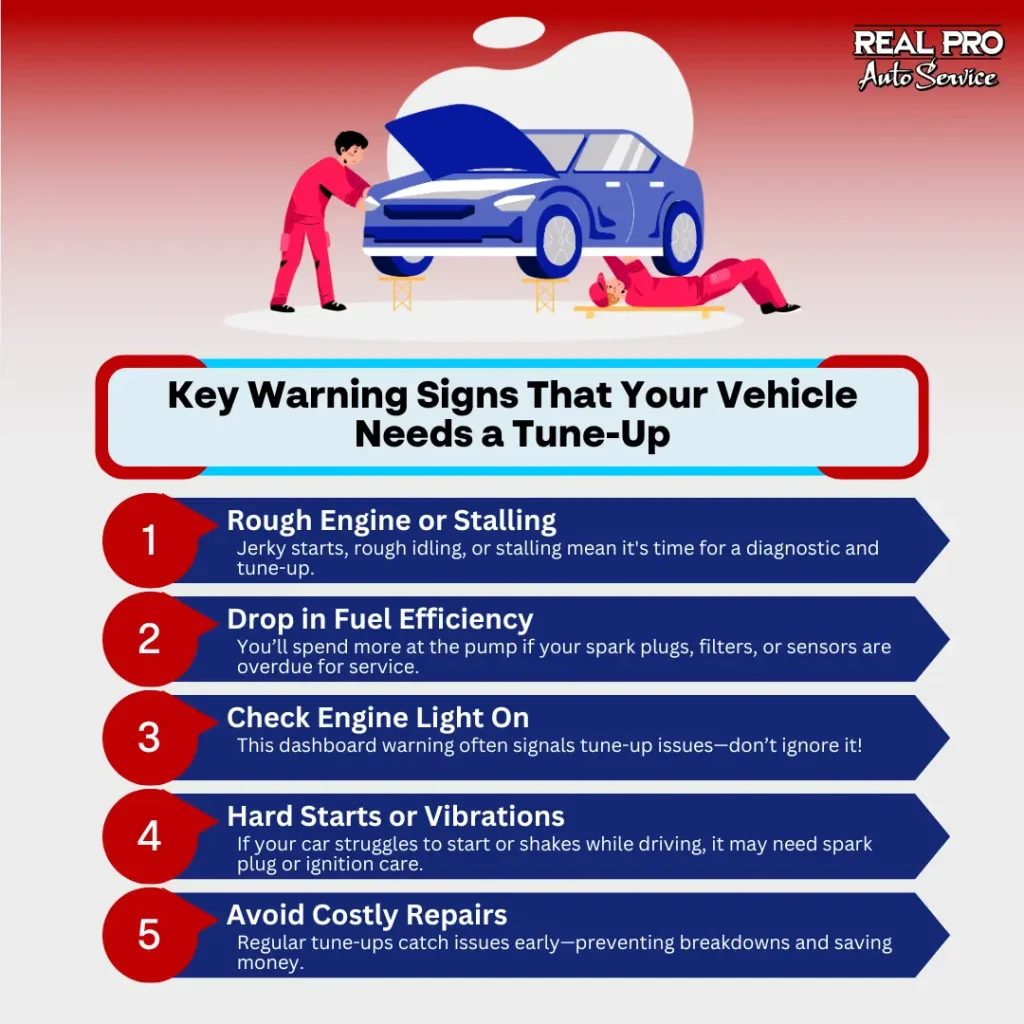
- An engine running rough, stalling, or making unusual noises indicates a potential need for a tune-up.
- A noticeable drop in fuel efficiency suggests that the vehicle may require maintenance.
- The activation of the check engine light often signals an underlying issue needing attention.
- Difficulty starting the engine or experiencing vibrations while driving can indicate mechanical problems.
- Regularly monitoring these signs can help prevent more significant issues and costly repairs.
What Is an Auto Tune Up?
An auto tune-up is like a health checkup for your vehicle, ensuring it runs smoothly and efficiently.
You might be wondering, what are the indicators that your car requires a tune-up? Common indicators include poor fuel efficiency, rough idling, or unusual noises.
So, how can you tell if your car needs a tune-up? Check for warning lights on the dashboard or difficulty starting the engine. If you’re asking, what happens when your car needs a tune-up, neglecting it can lead to bigger issues down the road.
You may also be curious about the cost of a car tune-up, which can vary depending on the services required.
Understanding the meaning of a car tune-up can help you recognize its importance in maintaining your vehicle’s performance.
What Goes Into A Vehicle Tune-Up
When you schedule a vehicle tune-up, you’re investing in your car’s longevity and performance.
A typical tune-up involves a thorough check of essential components like spark plugs, filters, and fluids.
Your technician will replace worn spark plugs to guarantee efficient combustion and peak fuel economy. They’ll also inspect and replace air and fuel filters, which help maintain engine cleanliness.
Fluids, including oil, coolant, and brake fluid, are topped off or changed as needed. Additionally, your car’s battery, belts, and hoses will be inspected for signs of wear and tear.
By addressing these key areas, you’re not just enhancing your vehicle’s performance; you’re also preventing potential issues down the road, securing a smoother, more reliable driving experience.
Warning Signs You Need a Tune-Up
How can you tell if your car is overdue for a tune-up? There are a few warning signs to watch for.
If your engine’s running rough, stalling, or making unusual noises, it’s a strong indicator that something’s not right. You might also notice a drop in fuel efficiency or an increase in exhaust emissions.
If your check engine light is on, don’t ignore it; it’s your car trying to communicate a problem.
Additionally, if you’re experiencing difficulty starting the engine or if you see vibrations while driving, it’s time to get a professional opinion.
Regularly monitoring these signs can help you address issues before they escalate, ensuring your vehicle runs smoothly and efficiently.
Avoid These Problems With Regular Tune-Ups
Regular tune-ups can prevent a host of problems that might arise from neglecting your vehicle’s maintenance.
By staying proactive, you can avoid issues like reduced fuel efficiency, leading to higher costs at the pump. Ignoring your car’s needs might also result in engine misfires or poor acceleration, making your drive less enjoyable.
Regular inspections can catch small issues before they turn into major repairs, saving you both time and money.
Additionally, tune-ups help maintain your vehicle’s reliability, ensuring you’re not stranded on the side of the road.
Overall, investing in routine maintenance keeps your car in top shape, enhances safety, and prolongs its lifespan.
Don’t wait for problems to arise—make regular tune-ups a priority!
Car Tune Up Checklist
A thorough car tune-up checklist can help you confirm your vehicle runs smoothly and efficiently.
Start by checking the engine oil level and replacing it if it’s dirty or low. Next, inspect the air filter; a clean filter improves airflow and fuel efficiency.
Don’t forget to examine the spark plugs —worn plugs can lead to poor performance.
Check fluid levels for coolant, brake, and transmission fluids, topping them off as necessary.
Also, inspect the battery for corrosion and verify that the connections are tight. Check the tires for adequate air pressure and sufficient tread depth last.
Following this checklist can prevent issues and enhance your vehicle’s longevity, giving you peace of mind on the road.
If you’re not sure where to start or prefer professional support, turn to the experts at Real Pro Auto Service. With ASE-certified technicians and locations in Grand Rapids, Wyoming, and Saranac, they offer thorough, reliable tune-up services tailored to your vehicle’s needs.
Whether it’s spark plugs, filters, or fluid inspections, Real Pro Auto ensures your car gets the attention it deserves, keeping you safe and your engine running strong.
For those in Wyoming, Michigan, having a reliable, certified auto shop nearby is a great convenience.
Frequently Asked Questions
How Often Should I Get a Tune-Up for My Car?
You should get a tune-up every 30,000 miles or so, but it’s best to check your owner’s manual for specific recommendations.
Regular maintenance helps keep your car running efficiently and can prevent costly repairs in the future.
Can I Perform a Tune-Up Myself, or Should I Hire a Professional?
Tackling a tune-up yourself can feel like jumping into a deep end.
While you can save money, hiring a professional guarantees precision and expertise, keeping your vehicle running smoothly and safely without the guesswork.
What Is the Average Cost of a Car Tune-Up?
The average cost of a car tune-up usually ranges between $100 and $300, depending on your vehicle’s make and model. It’s best to check local shops for specific pricing and services they offer.
Will a Tune-Up Improve My Car’s Fuel Efficiency?
Yes, a tune-up can improve your car’s fuel efficiency. By ensuring your engine runs smoothly and all components are in top shape, you’ll likely notice better mileage and reduced fuel consumption over time.
Do Different Vehicles Require Different Types of Tune-Ups?
Every car’s got its quirks, and different vehicles do require different types of tune-ups.
Factors like make, model, and age influence the specifics, so it’s best to consult your owner’s manual or a trusted mechanic.
Do Different Vehicles Require Different Types of Tune-Ups?
Every car’s got its quirks, and different vehicles do require different types of tune-ups.
Factors like make, model, and age influence the specifics, so it’s best to consult your owner’s manual or a trusted mechanic.
What is the most common sign that a car needs a tune-up?
The most common sign that a car needs a tune-up is a noticeable decrease in performance. This can manifest in a few different ways.
You may experience a drop in fuel economy, finding that you need to fill up your gas tank more frequently than you used to.
Another widespread symptom is a rough idle, where the engine feels shaky or inconsistent when you’re stopped at a light.
You may also notice that the car hesitates or struggles to accelerate when you press the gas pedal.
These issues are often caused by worn-out spark plugs or a clogged air filter, both of which are typically addressed during a tune-up.
If your car just doesn’t feel as responsive or smooth as it used to, it’s a strong indication that it’s time for a service.
What does a car sound like when it needs a tune-up?
When a car needs a tune-up, it can start to make a few distinctive noises.
One of the most common is a knocking or ‘pinging’ sound from the engine, especially during acceleration.
This can be a sign of old spark plugs causing the fuel to ignite at the wrong time. You might also hear a hissing sound from under the hood, which could indicate a vacuum leak.
A squealing or chirping noise that gets louder as you accelerate often points to a worn or loose serpentine belt. While not always part of a standard tune-up, it’s something a mechanic would check.
If the engine is misfiring due to bad spark plugs or wires, you might hear a popping or sputtering sound from the exhaust.
Any new and unusual noise from your engine is a good reason to get it checked out.
Conclusion
Staying on top of your car’s maintenance schedule with regular tune-ups is a smart investment in its health and your peace of mind.
By paying attention to the warning signs your vehicle gives you, such as decreased fuel efficiency, strange noises, or a rough idle, you can address issues before they lead to a breakdown.
A tune-up is a proactive way to ensure your engine is running at its best, which not only improves performance but also helps you avoid more costly repairs down the road.
Don’t wait for a small problem to become a big one. Listen to your car and give it the care it needs to keep you moving safely.
When it’s time for a professional tune-up, you can trust the experts at Real Pro Auto Service.