Reasons for Poor Gas Mileage
Poor gas mileage happens when your car uses more fuel than it should. The main reasons are low tire pressure, dirty air filters, engine problems, and bad driving habits like speeding or idling too long. When your car has to work harder, it burns more gas and wastes money. Keeping up with regular maintenance and driving smoothly are the easiest ways to improve fuel economy and get more miles out of every tank.
Key Takeaways
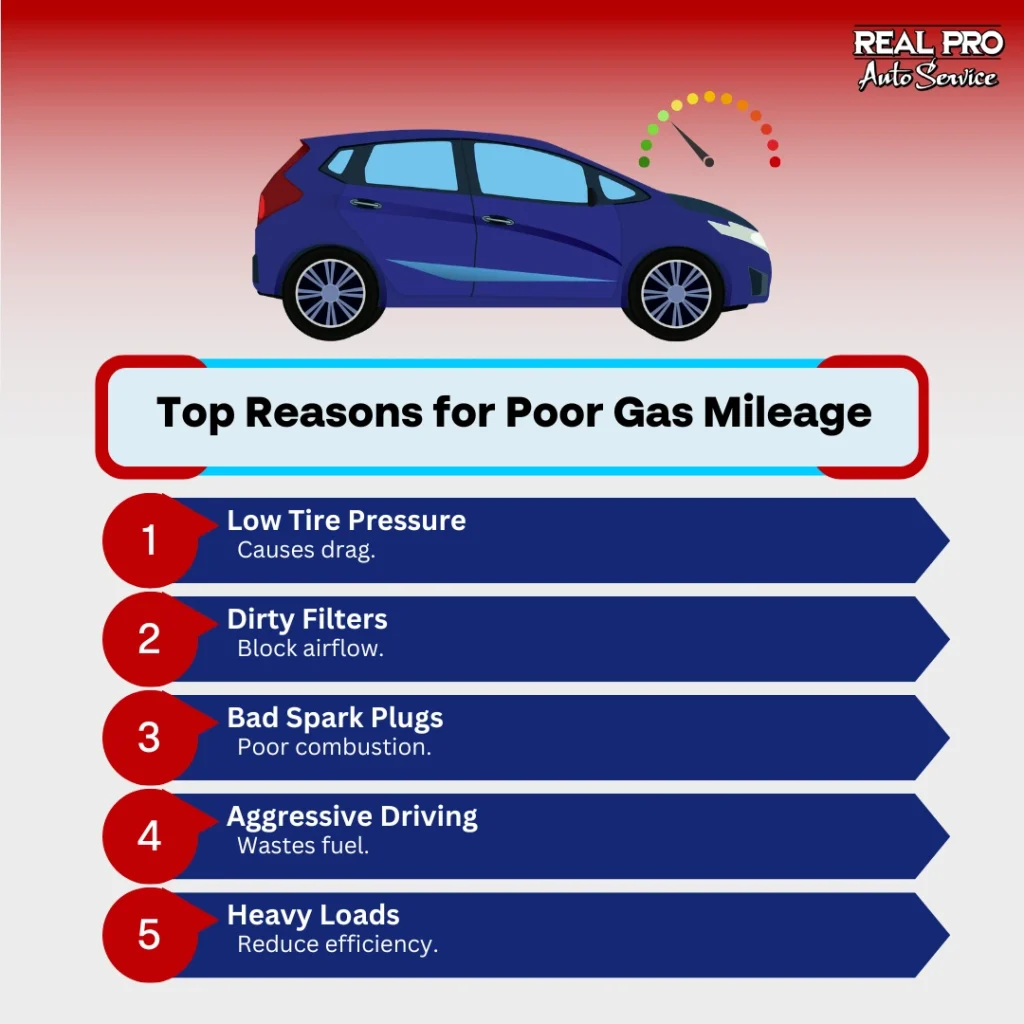
- Underinflated or worn-out tires increase rolling resistance and reduce fuel efficiency.
- Faulty spark plugs and malfunctioning oxygen sensors can lead to poor combustion and decreased fuel efficiency.
- Aggressive driving habits like rapid acceleration and sudden braking waste fuel.
- Dirty air filters and clogged fuel injectors force the engine to work harder, increasing fuel consumption.
- Excessive idling and carrying heavy loads put extra strain on the engine, reducing fuel efficiency.
Common Causes of Reduced Fuel Efficiency
If you’re noticing a dip in your fuel efficiency, there are a couple of common culprits to contemplate. Underinflated or worn-out tires can drag down your mileage, while dirty air filters and fuel systems might be restricting airflow and fuel delivery. Addressing these issues can help you get back on track with better gas mileage.
Underinflated or worn-out tires
While you might not think much about your tires, underinflated or worn-out ones can significantly impact your vehicle’s fuel efficiency. Proper tire pressure affects fuel economy considerably; when your tires are low on air, your engine has to work harder, which lowers your mpg. Additionally, worn-out tires can lead to poor traction, causing your vehicle to require more energy to maintain speed. It’s also important to take into account wheel alignment; misaligned tires can create uneven wear and increase rolling resistance. Regularly checking your tire pressure and ensuring your tires are in good condition can help you maintain ideal fuel efficiency, saving you money in the long run. Don’t overlook your tires—they’re essential to your vehicle’s performance.
Dirty air filters and fuel systems
Neglecting your vehicle’s air filters and fuel systems can lead to significant drops in fuel efficiency. A clogged air filter restricts airflow to the engine, causing it to work harder and ultimately reducing gas mileage. When your engine can’t breathe properly, it burns more fuel than necessary. Additionally, dirty fuel injectors can disrupt the fuel spray pattern, leading to incomplete combustion. This not only hampers performance but also impacts fuel economy. Regular maintenance, including checking and replacing air filters and cleaning fuel injectors, can help keep your engine running smoothly and efficiently. By addressing these issues promptly, you’ll not only improve your gas mileage but also extend the lifespan of your vehicle. Don’t overlook these critical components for peak performance!
Engine and Transmission Problems
When your engine or transmission isn’t working properly, it can seriously impact your gas mileage. Issues like faulty spark plugs or sensors, as well as transmission slipping, can lead to inefficient fuel use. It’s essential to address these issues promptly to help keep your vehicle running smoothly.
Faulty spark plugs or sensors
Faulty spark plugs or sensors can significantly impact your vehicle’s performance and fuel efficiency. When spark plugs wear out, they can cause misfires, leading to poor combustion and increased fuel consumption. You may notice symptoms of a bad oxygen sensor, such as rough idling or a drop in acceleration, which can further exacerbate fuel inefficiency. To keep your engine running smoothly, it’s essential to follow spark plug maintenance tips, such as checking and replacing them at regular intervals. Ignoring these components can result in costly repairs down the line. By staying proactive in monitoring and maintaining your spark plugs and sensors, you can enhance your vehicle’s performance and ultimately improve your gas mileage. Don’t let these small parts lead to big problems!
Transmission slipping or misfiring issues
Engine performance issues like faulty spark plugs can lead to a chain reaction of problems, including transmission slipping or misfiring. When your transmission struggles, it can cause increased engine strain and negatively impact fuel use, resulting in poor fuel economy. You might notice your car hesitating or jerking during acceleration, which signals that something’s off. If you’re experiencing these symptoms, it’s essential to get poor fuel economy diagnostics done as soon as possible. Ignoring transmission issues not only affects your gas mileage but can also lead to more costly repairs down the line. Trust a professional to pinpoint the issue and restore your vehicle’s performance, ensuring you get the most out of every gallon of gas.
Driving Habits That Waste Gas
Your driving habits play a massive role in how efficiently your vehicle uses gas. Rapid acceleration and sudden braking can drain your tank faster than you think, while excessive idling or carrying heavy loads adds unnecessary strain. By adjusting these habits, you can enhance your gas mileage and reduce your fuel costs.
Rapid acceleration and braking
Rapid acceleration and sudden braking can wreak havoc on your gas mileage. When you frequently slam the gas pedal or brake hard, your engine uses more fuel than necessary, leading to poor efficiency. These driving habits that waste gas can add up quickly, costing you more at the pump. Instead, try to accelerate gradually and anticipate stops to maintain a steady speed. Not only will this improve your fuel economy, but it’ll also reduce wear and tear on your brakes. Additionally, regular car maintenance for better mileage, like ensuring your tires are properly inflated and your engine is tuned, can further enhance your fuel efficiency. Adopting smoother driving habits can make a significant difference in how far your gas goes.
Excessive idling or heavy loads
While it’s easy to underestimate the impact of excessive idling and heavy loads on fuel efficiency, these habits can considerably drain your gas mileage. When you leave your engine running while parked, you’re wasting fuel without even moving. Additionally, carrying heavy items increases the load on your engine, leading to higher fuel consumption. To combat this, consider gas mileage improvement tips like reducing idling time and unloading unnecessary weight. A regular fuel system inspection service can also help identify issues that may be affecting your vehicle’s efficiency. By adopting better driving habits and staying proactive with vehicle maintenance, you can enhance your gas mileage and save money at the pump.
Restore Better Fuel Economy with Real Pro Auto
Revitalize your vehicle’s fuel efficiency with the expert services at Real Pro Auto. An engine tune-up for efficiency can significantly enhance your car’s performance, ensuring it runs smoothly and consumes less fuel. Our ASE-certified technicians are skilled in diagnosing issues that could be affecting your gas mileage.
Choosing the right oil type is crucial for optimizing fuel economy, as it significantly impacts how well your engine performs. At Real Pro Auto, we’ll help you select the best oil for your vehicle and perform any necessary maintenance.
With our customer-first approach and commitment to quality, you can trust us to restore your vehicle’s fuel economy and keep you on the road longer. Schedule your appointment today!
Frequently Asked Questions
How Does Tire Pressure Affect Gas Mileage?
Tire pressure directly affects gas mileage by influencing rolling resistance. If your tires are under-inflated, your vehicle has to work harder, consuming more fuel. Keeping them properly inflated helps maximize efficiency and save you money.
Can Fuel Quality Impact Fuel Efficiency?
Absolutely, fuel quality can impact fuel efficiency. Using higher-quality fuels can lead to better combustion and improved performance, while lower-quality fuels might cause engine inefficiencies, ultimately affecting how far you can drive on a tank.
What Role Does Vehicle Weight Play in Gas Mileage?
Ever wonder why your car struggles uphill? Vehicle weight significantly impacts gas mileage; the heavier your vehicle, the more fuel it consumes. Lighten your load, and you might just see those numbers improve.
Are There Specific Maintenance Tasks to Improve Fuel Economy?
Yes, regular maintenance tasks such as oil changes, air filter replacements, and tire rotations can significantly improve your fuel economy. Keeping your engine tuned and ensuring proper tire pressure also helps improve your gas mileage.
How Does Using Air Conditioning Influence Fuel Consumption?
Using air conditioning can increase your fuel consumption because it puts an extra load on the engine. If you’re driving in stop-and-go traffic, consider rolling down the windows instead to save on gas.
Conclusion
In the grand symphony of driving, every note counts—especially when it comes to your wallet. By tuning into the common causes of poor gas mileage, you can transform a discordant experience into a harmonious one. With a bit of attention to your vehicle and your driving habits, you’ll hit all the right notes for better fuel efficiency. So, gear up and take charge; a smoother, more economical ride is just around the corner, waiting for you to embrace it!