How to Tell if Your Brake Pads Are Worn Out
Your car’s ability to stop safely is its most important safety feature, and your brake pads are at the center of that system. These small, hardworking components are designed to wear down over time, but letting them get too thin can be dangerous and lead to more expensive repairs. So, how do you know when it’s time for a replacement? Your car will often give you clear warning signs. From strange noises to changes in how the brake pedal feels, these signals are your cue to take action. This guide will teach you how to recognize the common symptoms of worn-out brake pads, so you can address the issue promptly and ensure your vehicle remains safe and reliable on the road.
Key Takeaways
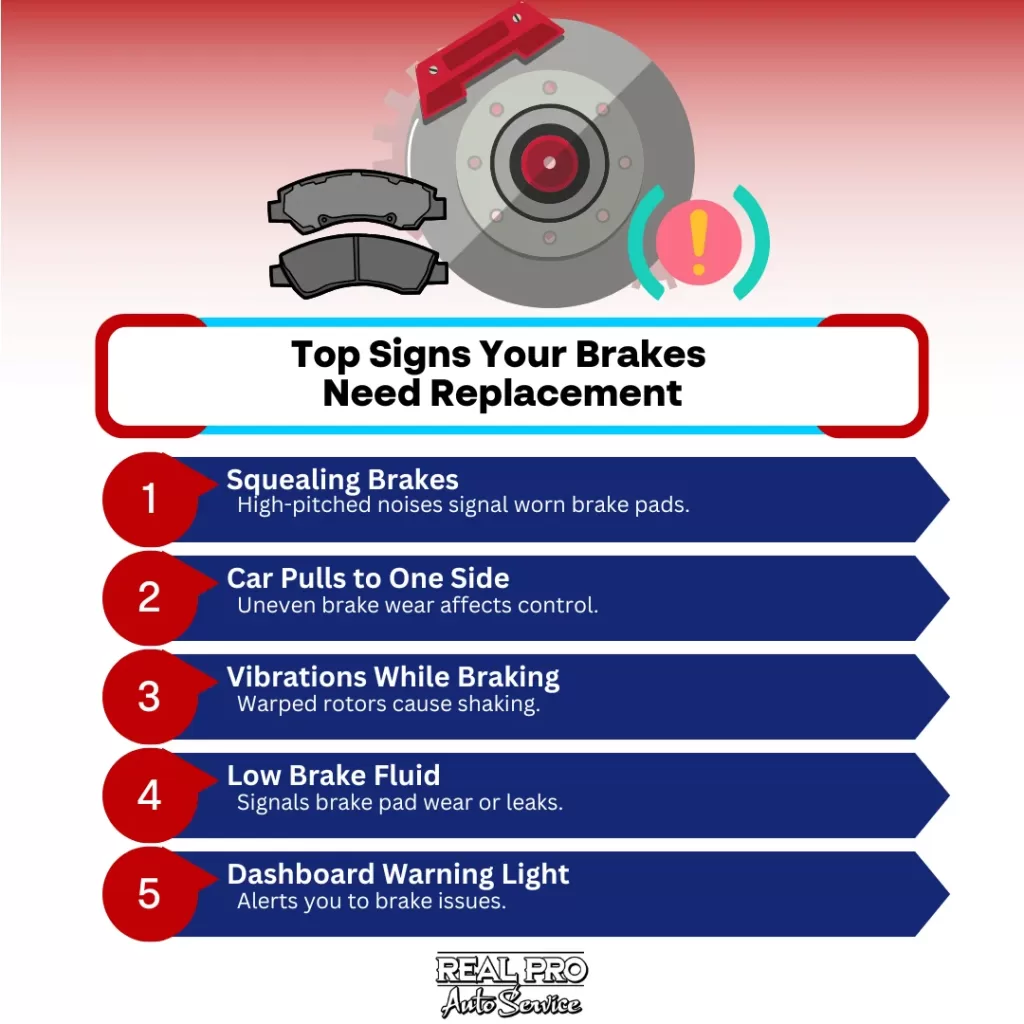
- Listen for squeaking or squealing sounds when braking, indicating worn-out brake pads.
- Check for a spongy brake pedal feel, which may signal low brake fluid from pad wear.
- Notice if your car pulls to one side while braking, suggesting uneven brake pad wear.
- Look for warning lights on your dashboard that may alert you to brake pad issues.
- Pay attention to vibrations or pulsations during braking, which can indicate deteriorating brake pads.
Signs of bad brakes
These signs could indicate your brakes are in bad shape and need immediate attention.
1. A squealing sound
A squealing sound when you brake is often one of the first signs that your brake pads are worn out. The worn-out brake pads’ sound can indicate that it’s time for a replacement. Ignoring this noise might lead to more serious issues down the line.
Here are some key points to take into account:
- The squeal usually occurs when you apply the brakes.
- It can be a high-pitched sound, particularly noticeable at lower speeds.
- You might hear it more often in wet or humid conditions.
- The sound may fade as you press harder on the brake pedal.
- It’s crucial to get your brakes inspected if you notice this sound.
Understanding the complete guide to brake fluid maintenance helps you maintain your entire braking system and extend the time between complete brake pad replacement.
2. Your car veers to one side
When your car starts to veer to one side while braking, it’s a clear indication that something’s off with your brake system; this behavior can be one of the most noticeable signs of worn-out brake pads. If you find yourself constantly correcting your steering, it’s time to pay attention. Symptoms of worn-out brake pads often manifest as uneven wear on the pads or rotors, causing your vehicle to brake unevenly. This can lead to decreased stopping power and potential safety hazards. Don’t ignore these signs of worn-out brake pads; they can escalate into more serious brake issues if left unaddressed. Regular inspections can prevent further damage and guarantee your vehicle remains safe on the road.
3. Low brake fluid level
One of the most telling signs of bad brakes is a low brake fluid level. When your brake fluid dips below the recommended level, it can indicate that your brake pads are worn out or that there’s a leak in the system.
Here’s how to tell if brake pads are worn out based on your brake fluid:
- Check the fluid reservoir regularly.
- Look for any puddles or spots under your car.
- Pay attention to a spongy brake pedal feel.
- Notice any changes in brake response.
- Keep an eye on your dashboard warning lights.
If you notice any of these signs, professional brake pad replacement at our shop in Grand Rapids can restore your vehicle’s stopping power.
Signs you need new brake rotors
Recognizing the signs that you need new brake rotors can prevent further damage and guarantee your safety on the road. If you feel vibrations or hear grinding noises when braking, it’s a clear indication that your rotors might be warped or worn out. You might also notice uneven wear on your brake pads; if they’re wearing down faster on one side, it can affect your rotors too.
Learning about brake pads, rotors, and when replacement is necessary helps you understand your braking system better.
How often should you replace brake pads?
How often should you replace brake pads? It usually depends on your driving habits and the type of vehicle you have.
Generally, you should consider replacing them every 30,000 to 70,000 miles.
Here are some signs to help you know if brake pads are worn out:
- Squeaking or squealing noises
- Vibration or pulsation when braking
- Warning lights on your dashboard
- Reduced braking performance
- Grinding sounds when braking
For more detailed guidance on how often you should replace your brake pads, consult with a professional mechanic.
Frequently Asked Questions
How often should you replace brake rotors?
Brake rotors, like brake pads, are vital components of your vehicle’s braking system and should be monitored closely. You generally need to replace them every 50,000 to 70,000 miles, but this can vary based on your driving habits and conditions. If you notice vibration or grinding sounds when braking, it could be a sign that your rotors are warped or worn down. It’s important to check your rotors when you’re evaluating how to know if your brake pads are worn out, as worn-out pads can lead to rotor damage. If you ignore the consequences of worn-out brake pads, you risk more costly repairs down the line. Regular inspections will help keep your brakes functioning safely.
How brakes work — and how they wear down
The braking system of your vehicle is a complex network of components that work together to bring you to a stop safely. Over time, wear and tear can cause your brake pads to deteriorate.
When you’re driving with worn-out brake pads, you might experience:
- Reduced stopping power
- Increased noise or squeaking
- Vibration in the brake pedal
- Longer stopping distances
- Brake warning light activation
Understanding what happens when your brake pads are worn out is essential for your safety. As the pads wear down, they become less effective, risking damage to your rotors and compromising your vehicle’s overall braking performance. Regular inspection and timely replacement can help you avoid serious issues and keep you safe on the road.
What causes brake rotors to wear down?
While you might not think about it often, several factors can contribute to the wear of your rotors. One of the main culprits is the condition of your brake pads. If you’re wondering what worn-out brake pads sound like, the squealing or grinding noise can indicate they’re not making proper contact, which can lead to rotor damage. Additionally, frequent hard braking generates excessive heat, causing rotors to warp over time.
Imagine driving with a heavy load; worn brake pads can indeed hinder fuel efficiency. They cause your engine to work harder, leading to higher fuel consumption. Keeping them in check helps maintain your car’s performance and economy.
Ignoring worn brake pads can lead to decreased braking performance, longer stopping distances, and potential brake failure. This not only jeopardizes your safety but can also result in costly repairs and increased wear on other components.
What is the most common sign of worn brake pads?
The most common and well-known sign of worn brake pads is a high-pitched squealing or screeching sound when you apply the brakes. This isn’t just a random noise; it’s a built-in safety feature. Most brake pads are manufactured with a small metal tab called a wear indicator. As the friction material on the brake pad wears down, this metal tab comes into contact with the brake rotor, creating that unmistakable squealing sound.
How can you tell if your brake pads are worn out without removing the wheel?
While the most accurate way to check your brake pads is to remove the wheel, there are a few things you can do to get a general idea of their condition. First, listen for the telltale squealing sound of the wear indicators. Second, pay attention to how your brake pedal feels. A pedal that feels soft, spongy, or goes lower to the floor than it used to can be a sign of worn pads. Third, you can sometimes get a visual inspection without removing the wheel. Look through the spokes of your wheel at the brake caliper.
Conclusion
Your brakes are not a component to be ignored. Paying attention to the warning signs of worn brake pads is crucial for your safety and the longevity of your vehicle. A simple squeal or a change in your brake pedal’s feel is your car’s way of asking for attention. By addressing these symptoms early, you can avoid more serious and costly problems, like damaged rotors. Regular brake inspections should be a part of your routine maintenance. If you’re ever in doubt about the condition of your brakes, it’s always best to have them checked by a professional. A little proactive care ensures you can brake with confidence every time. Ensuring road safety is a community-wide effort, supported by local organizations like the Grand Rapids Chamber of Commerce.
When you need professional service, look for an auto shop offering free loaner cars to minimize disruption to your day.