How To Increase The Fuel Economy Of A Car?
You can increase your car’s fuel economy by keeping up with regular maintenance, driving smoothly, and cutting down on extra weight. Simple things like oil changes, proper tire pressure, avoiding hard braking, and clearing junk out of your trunk all help your car use less gas. The less stress you put on your engine, the farther your car will go on a tank of fuel.
Key Takeaways
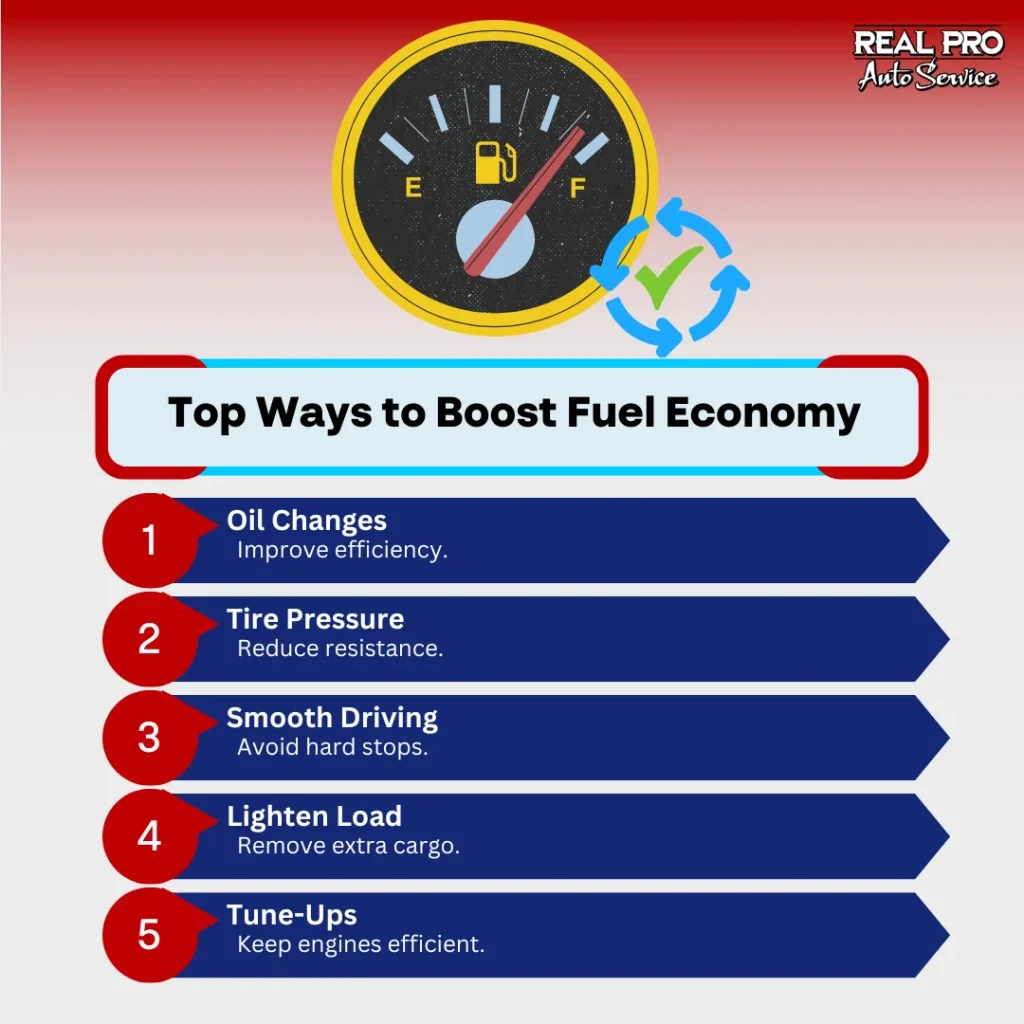
- Perform regular maintenance, including timely oil changes and tune-ups, to enhance engine performance and fuel efficiency.
- Maintain proper tire pressure and ensure regular wheel alignments to reduce rolling resistance and improve gas mileage.
- Adopt smarter driving habits like smooth acceleration, gentle braking, and minimizing idling to maximize fuel economy.
- Reduce unnecessary weight in the vehicle by clearing out unused items and limiting cargo to enhance efficiency.
- Utilize professional fuel system and engine care services to ensure optimal performance and efficiency of your vehicle’s systems.
Keep Up with Regular Maintenance
Regular maintenance is key to getting the most out of your vehicle’s fuel efficiency. Timely oil changes and tune-ups can significantly improve your engine’s performance, leading to better mileage. When you stay on top of these services, you’re not just preserving your car; you’re also saving money at the pump.
Why timely oil changes improve efficiency
When you keep up with regular oil changes, you’re not just prolonging your engine’s life; you’re also enhancing its overall efficiency. Fresh oil lubricates engine components more effectively, reducing friction and wear. This means your engine doesn’t have to work as hard, ultimately leading to better fuel economy. If you skip those regular oil changes for mileage, you might find your car consuming more fuel than necessary, as dirty oil can hinder performance. Additionally, old oil can lead to sludge buildup, which further decreases efficiency. By staying on top of your oil change schedule, you ensure your engine runs smoothly, improving its lifespan and fuel economy. Regular maintenance is key to keeping costs down at the pump.
The role of tune-ups in better mileage
Regular tune-ups play an essential role in enhancing your vehicle’s mileage, as they help guarantee that all engine components are functioning at their best. During a tune-up, technicians check and replace worn-out parts, ensuring your engine runs smoothly. This proactive car maintenance for better mpg includes adjusting fuel injectors, replacing air filters, and inspecting spark plugs. When your engine operates efficiently, it consumes fuel more effectively, leading to improved gas mileage. Ignoring tune-ups can result in decreased performance and increased fuel consumption, which no driver wants. So, schedule regular tune-ups to keep your car in top shape and maximize your fuel economy. It’s a smart investment for both your wallet and the environment.
Maintain Proper Tire Care
Maintaining proper tire care is essential for maximizing your fuel economy. Keeping your tires at the correct pressure not only saves you money at the pump but also improves your vehicle’s handling. Additionally, regular wheel alignments can guarantee your tires wear evenly, further enhancing gas mileage.
Correct tire pressure for fuel savings
Ensuring your tires are properly inflated not only enhances safety but can also lead to significant fuel savings. Maintaining proper tire inflation is essential for optimizing your car’s fuel economy. When your tires are under-inflated, they create more rolling resistance, forcing your engine to work harder and consume more fuel. Regularly checking your tire pressure can help you avoid this issue and improve your vehicle’s efficiency. Aim to keep your tires inflated to the manufacturer’s recommended levels, which you can usually find on a sticker inside the driver’s door or in your owner’s manual. By prioritizing proper tire inflation, you not only save on gas costs but also extend the life of your tires, making it a wise choice for both your wallet and vehicle.
How wheel alignments affect gas mileage
Proper tire care goes beyond just checking inflation; it also includes getting wheel alignments. When your wheels are misaligned, your tires aren’t making ideal contact with the road, which can lead to increased rolling resistance. This resistance forces your engine to work harder, ultimately decreasing your gas mileage. Regular wheel alignments are vital gas-saving maintenance tips that can improve your fuel efficiency considerably. By ensuring your wheels are aligned correctly, you can enhance tire wear and maintain better handling, all while saving on fuel costs. So, don’t overlook this key aspect of tire care—schedule a wheel alignment to keep your vehicle running efficiently and your gas expenses in check.
Adopt Smarter Driving Habits
To boost your fuel economy, adopting smarter driving habits is key. By avoiding aggressive acceleration and braking, you can save fuel and reduce wear on your vehicle. Additionally, cutting down on idling and planning efficient routes can make a big difference in how far your gas takes you.
Avoiding aggressive acceleration and braking
Accelerate smoothly and brake gently to maximize your fuel economy. Adopting these fuel-efficient driving habits can make a significant difference in your vehicle’s performance. Here are some tips to help you drive smarter:
- Anticipate traffic flow: Look ahead and adjust your speed to avoid sudden stops.
- Use cruise control: Maintain a steady speed on highways to improve efficiency.
- Gradual acceleration: Accelerate slowly to reduce fuel consumption, especially from a stop.
- Gentle braking: Apply the brakes gradually to avoid wasting energy and fuel.
Reducing idling and planning efficient routes
While you might not think about it often, reducing idling and planning efficient routes can significantly boost your fuel economy. Whenever you are waiting in your car, consider turning off the engine to reduce engine idling. This simple step can save you fuel and decrease emissions. Additionally, planning your trips can make a huge difference. Use GPS apps to find the most efficient routes, avoiding traffic congestion and unnecessary stops. Combine errands into one trip whenever possible, and keep your vehicle well-maintained to guarantee peak performance. By adopting these smarter driving habits, you’ll not only improve your fuel efficiency but also save money in the long run. It’s a win-win for both your wallet and the environment!
Reduce Unnecessary Weight and Drag
If you’re looking to improve your vehicle’s fuel economy, start by checking for unnecessary weight and drag. Extra cargo can significantly reduce fuel efficiency, while roof racks and accessories create additional drag that makes your engine work harder. By lightening your load and removing any bulky items, you can help maximize your gas mileage.
The impact of extra cargo on fuel economy
Reducing unnecessary weight and drag can greatly enhance your vehicle’s fuel economy. One major factor is the impact of extra cargo. By removing excess vehicle weight, you can improve how efficiently your car runs. Here’s how to manage your cargo effectively:
- Clear Out the Trunk: Regularly remove items that you don’t use.
- Limit Passengers: Only take along those who need a ride.
- Avoid Heavy Roof Boxes: If possible, skip the rooftop storage.
- Store Wisely: Place heavier items lower in the car to optimize balance.
How roof racks and accessories create drag
When you add a roof rack or other accessories to your vehicle, you might inadvertently create extra drag, which can significantly impact fuel economy. This added wind resistance forces your engine to work harder, leading to increased fuel consumption. To minimize this effect, consider using lightweight car accessories designed for aerodynamics. These options can reduce drag while still providing the functionality you need. Additionally, if you’re not using your roof rack, it’s best to remove it when possible. Keeping your vehicle streamlined helps optimize fuel efficiency, especially on long trips. By being mindful of what you attach to your roof, you can improve your car’s performance and save money at the pump.
Get Professional Fuel System and Engine Care at Real Pro Auto
To maximize your vehicle’s fuel economy, turning to Real Pro Auto for professional fuel system and engine care can make all the difference. Regular maintenance can enhance your car’s performance and fuel efficiency. Here are four key services to take into account:
Maximize your vehicle’s fuel economy with expert maintenance from Real Pro Auto for enhanced performance and efficiency.
- Fuel System Cleaning: Removes deposits that hinder fuel flow.
- Engine Diagnostics: Identifies problems that affect performance.
- Air Filter Replacement: A clean air filter boosts fuel efficiency.
- Regular Tune-Ups: Guarantees your engine runs at its best.
Frequently Asked Questions
How Does Air Conditioning Affect Fuel Economy?
Air conditioning can reduce your car’s fuel economy because it puts an extra load on the engine. To save fuel, consider using the AC sparingly and opting for ventilation.
What Role Does Fuel Quality Play in Fuel Efficiency?
Imagine your friend’s car struggling uphill. Fuel quality significantly affects fuel efficiency; using high-octane gasoline can improve performance and mileage. When you prioritize quality, you’re ensuring your vehicle runs smoother and longer.
Can Adding Fuel Additives Improve Fuel Economy?
Yes, adding fuel additives can improve fuel economy. They help clean the fuel system and enhance combustion efficiency, which may lead to better mileage. Just make sure to choose high-quality additives for the best results.
Does Driving at High Speeds Significantly Reduce Fuel Efficiency?
Yes, driving at high speeds does considerably reduce fuel efficiency. Your vehicle consumes more fuel when you exceed ideal speeds, leading to decreased mileage. Maintaining a steady, moderate speed can help you save on fuel costs.
How Often Should I Change My Engine Air Filter?
Think of your engine air filter as the lungs of your vehicle. You should change it every 12,000 to 15,000 miles, or more often if you drive in dusty conditions, to keep your engine breathing cleanly.
Conclusion
By following these tips, you can significantly boost your car’s fuel economy and save money at the pump. For instance, a commuter named Sarah started regularly checking her tire pressure and adjusted her driving style to avoid rapid acceleration. Over a month, she noticed a 15% increase in her gas mileage, allowing her to spend less on fuel and more on her weekend adventures. Take control of your vehicle’s efficiency—you’ll feel the difference in your wallet!