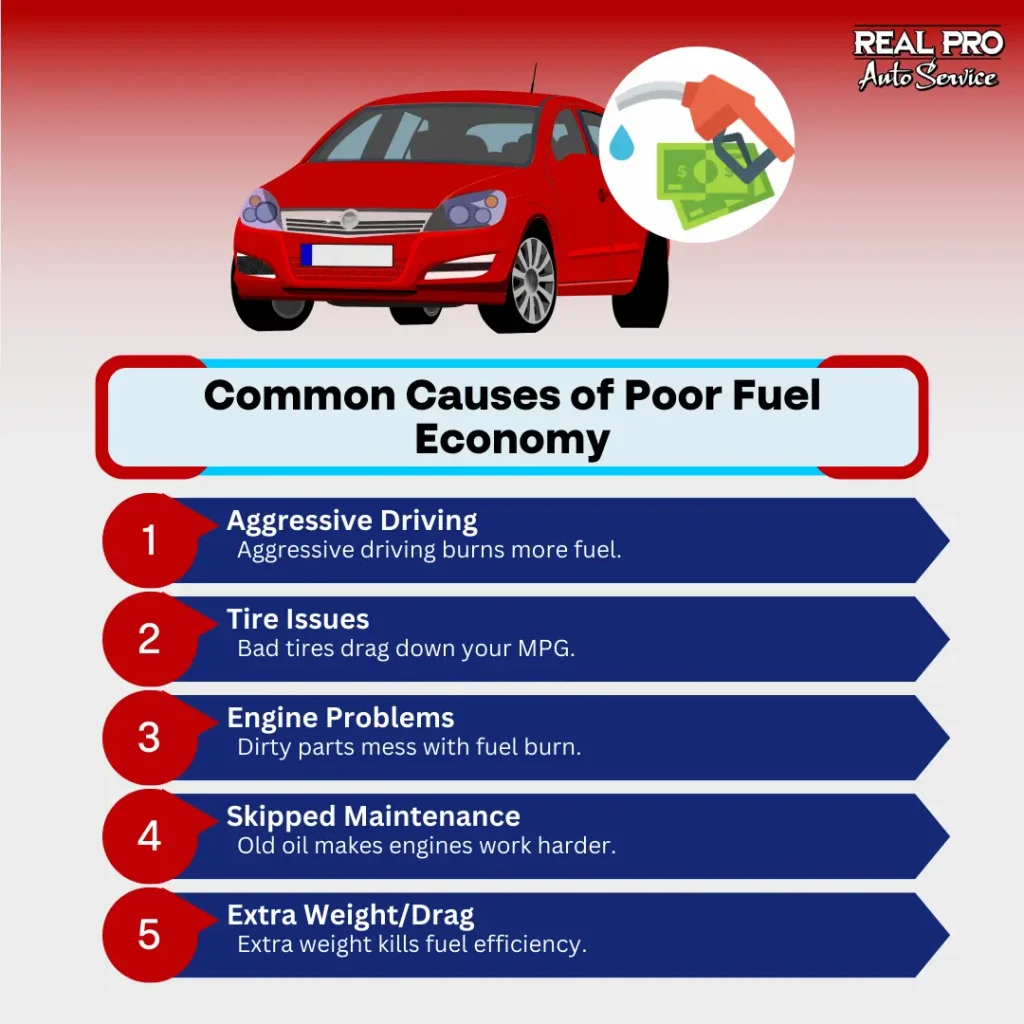
Common Causes of Poor Fuel Economy
Noticing your car needs more frequent trips to the gas station can be frustrating.
Often, the reason for poor fuel economy isn’t a single major issue but a combination of small things. Simple factors, such as the way you drive or the air pressure in your tires, can make a significant difference.
Your vehicle’s engine health, including clean fuel injectors and fresh spark plugs, also plays a crucial role. Even extra weight from clutter in your trunk can force your engine to work harder and burn more gas.
Understanding these common causes is the first step to improving your car’s efficiency, saving money, and reducing your environmental impact.
Keeping your vehicle in top shape not only saves you money but also supports a healthy local economy, a goal championed by organizations like the Grand Rapids Chamber of Commerce.
This guide will walk you through the main culprits behind poor gas mileage and what you can do about them.
Key Takeaways
- Aggressive driving behaviors like sudden acceleration and braking lead to increased fuel consumption and reduced efficiency.
- Underinflated tires create rolling resistance, significantly impacting fuel economy and vehicle performance.
- Dirty fuel injectors and worn spark plugs disrupt combustion, causing reduced power and increased emissions.
- Excessive weight from unnecessary cargo forces the engine to work harder, negatively affecting mileage.
- Neglecting regular maintenance, such as oil changes and tune-ups, can lead to decreased fuel efficiency and engine issues.
Poor Driving Habits
Your driving habits can significantly impact your fuel economy. Aggressive acceleration and sudden braking waste fuel, while excessive idling and speeding can lead to even worse mileage.
By making a few adjustments to your driving style, you can improve your vehicle’s efficiency and save money at the pump.
Aggressive acceleration and braking
Accelerating rapidly and braking hard can wreak havoc on your vehicle’s fuel economy.
If you find yourself engaging in aggressive driving habits, you might notice your gas tank emptying faster than usual.
Quick starts and sudden stops force your engine to work harder, burning more fuel in the process. It’s not just about speed; maintaining a smooth driving style can significantly improve efficiency.
Instead of racing from stoplights, try easing into your acceleration and gradually decelerating when approaching red lights. Minor adjustments can lead to noticeable savings at the pump.
By curbing those aggressive driving habits, you’ll not only enhance your fuel economy but also extend the life of your vehicle.
Excessive idling and speeding
Excessive idling and speeding can significantly reduce your vehicle’s fuel economy.
When you let your engine run while parked or accelerate rapidly, you’re contributing to excessive idling fuel waste.
Here are three ways to improve your driving habits:
- Turn off your engine when parked for more than a minute to avoid wasting fuel.
- Maintain a steady speed; stay within the speed limit to maximize fuel efficiency.
- Use cruise control on highways, which can help maintain a constant speed and reduce unnecessary fuel consumption.
Tire and Wheel Issues
When it comes to fuel economy, tire and wheel issues can significantly impact performance. If your tires are underinflated or worn, or if your wheels are misaligned, you might be wasting gas without even realizing it.
Keeping an eye on these factors can help improve your vehicle’s efficiency and save you money at the pump.
Underinflated or worn tires
Although many drivers might not realize it, underinflated or worn tires can significantly impact fuel economy.
When your tires aren’t properly inflated, they create more rolling resistance, resulting in increased fuel consumption due to underinflated tires.
To maximize your vehicle’s efficiency, consider these points:
- Check tire pressure regularly: Keeping your tires inflated to the recommended levels can help reduce fuel consumption.
- Inspect tread wear: Worn tires lose grip and efficiency, making your vehicle work harder and use more fuel.
- Rotate tires periodically: Regular rotation helps guarantee even wear, prolonging tire life, and maintaining ideal performance.
Addressing these tire issues can markedly improve your vehicle’s fuel economy, saving you money at the pump.
Misaligned wheels
Misaligned wheels can significantly hinder your vehicle’s fuel economy, causing it to consume more gas than necessary.
When your wheels aren’t aligned properly, they create uneven tire wear and increase rolling resistance, which forces your engine to work harder.
This extra strain results in poor maintenance, lowering mpg, making trips to the gas station more frequent and costly.
You might notice your car pulling to one side or that your tires wear unevenly—these are clear signs of misalignment. Regular wheel alignment checks can help maintain fuel efficiency and prolong tire life.
If you’re experiencing these issues, it’s wise to get your vehicle inspected by a trusted mechanic to avoid wasting fuel and money.
Engine and Fuel System Problems
If you’re noticing a drop in fuel economy, it might be due to engine and fuel system issues like dirty fuel injectors or faulty oxygen sensors. These problems can disrupt your vehicle’s performance and efficiency.
It’s crucial to address them promptly to keep your car running smoothly and save on fuel costs.
Dirty fuel injectors
When you notice a decline in your vehicle’s fuel economy, dirty fuel injectors could be the culprit. Clogged fuel injectors can disrupt the fuel spray pattern, leading to inefficient combustion.
This not only affects your engine’s performance but also causes you to use more fuel than necessary. Here are three signs your fuel injectors might be dirty:
- Rough Idling: Your engine may shake or vibrate more than usual.
- Reduced Power: You may struggle to accelerate or feel a loss of power while driving.
- Increased Emissions: Your vehicle might fail emissions tests due to incomplete combustion.
Keeping your injectors clean is crucial for achieving peak fuel economy and optimal engine performance.
If you’re experiencing these symptoms, professional fuel system repair at our shop in Grand Rapids can diagnose and resolve the issue.
Faulty oxygen sensors or spark plugs
Faulty oxygen sensors or spark plugs can significantly impact your vehicle’s fuel economy.
If your oxygen sensors aren’t functioning correctly, you might notice faulty oxygen sensor symptoms like poor acceleration, rough idling, or an illuminated check engine light.
These sensors help regulate the air-fuel mixture, and when they fail, they can cause your engine to burn more fuel than necessary.
Similarly, worn-out spark plugs lead to incomplete combustion, resulting in decreased efficiency and increased emissions. If you experience decreased mileage or engine performance issues, it’s vital to address these problems promptly.
Regular maintenance and timely replacements can keep your engine running efficiently and help improve your fuel economy. Don’t ignore the signs; your wallet will thank you!
Maintenance Neglect
When you neglect regular maintenance, your vehicle’s performance can take a hit, leading to poor fuel economy.
Old engine oil and filters can cause your engine to work harder than it should, while skipped tune-ups might leave it running inefficiently.
Staying on top of these tasks is essential for maximizing your car’s efficiency and saving money at the pump.
Old engine oil and filters
One of the most overlooked aspects of vehicle maintenance is the use of old engine oil and filters, which can significantly impact your fuel economy.
If you overlook these crucial components, you may experience fuel system issues that result in higher pump costs.
Here are three reasons to stay on top of your oil and filter changes:
- Reduced Friction: Fresh oil lubricates engine parts more effectively, improving efficiency.
- Cleaner Engine: New filters prevent contaminants from affecting your engine’s performance.
- Better Fuel Economy: Maintaining ideal oil quality guarantees your vehicle runs smoothly and conserves fuel.
Using quality fuel system cleaners can also help maintain optimal engine performance.
Skipped tune-ups
Neglecting regular maintenance can lead to several issues beyond just old engine oil and filters, and skipped tune-ups are a prime example.
When you avoid getting your vehicle tuned up, you risk having bad spark plugs that can severely impact your engine’s performance. These worn-out plugs can misfire, causing your engine to work harder and burn more fuel than necessary.
As a result, your fuel efficiency plummets, leading to more frequent stops at the gas station.
Regular tune-ups not only guarantee your spark plugs are in good condition but also optimize other components, keeping your engine running smoothly.
Don’t let skipped tune-ups drain your wallet; prioritize your vehicle’s maintenance for better fuel economy and overall performance.
Added Weight and Drag
If you’re carrying unnecessary cargo in your vehicle, it can weigh you down and hurt your fuel economy.
Additionally, roof racks and other accessories can create drag, making your engine work harder.
By reducing extra weight and streamlining your car’s design, you can improve efficiency on the road.
Carrying unnecessary cargo
Carrying unnecessary cargo can significantly impact your vehicle’s fuel economy, as added weight forces the engine to work harder.
This weight load impact on mileage can lead to noticeably decreased efficiency.
To improve your fuel economy, consider reducing the extra weight you carry.
Here are three standard items to check:
- Heavy tools – Take them out if you’re not using them regularly.
- Unused sports equipment – Those bikes or skis can add up in weight.
- Old clothes or trash – Clear out your trunk and backseat for better efficiency.
Roof racks and accessories increasing resistance
Removing unnecessary cargo can markedly improve your vehicle’s fuel efficiency, but it’s not just the weight inside that matters. Roof racks and accessories can significantly increase aerodynamic drag, contributing to low gas mileage. When you mount a roof rack, you’re altering your vehicle’s profile, which forces the engine to work harder against the resistance. This added drag can decrease fuel efficiency, especially at higher speeds. If you don’t frequently use your roof rack, consider removing it to reduce wind resistance and improve your gas mileage. Additionally, bulky accessories like cargo boxes can exacerbate this issue. By streamlining your vehicle, you’ll not only save on fuel costs but also enhance your overall driving experience.
Improve Your MPG with Real Pro Auto
Boost your vehicle’s fuel efficiency with the expert services at Real Pro Auto. If you’re wondering how to improve gas mileage, our ASE-certified technicians can help.
Here are three ways we boost your MPG:
- Engine Diagnostics: We identify and resolve issues that may be wasting fuel.
- Regular Maintenance: Our thorough check-ups guarantee your vehicle runs smoothly, enhancing fuel efficiency.
- Tire Care: Proper alignment and tire pressure can significantly impact how efficiently your vehicle uses fuel.
Don’t let poor fuel economy slow you down. Trust Real Pro Auto to provide the reliable service you need to maximize your vehicle’s performance. With our customer-first approach, you can enjoy peace of mind and better gas mileage on the road.
Frequently Asked Questions
How Can Weather Conditions Affect Fuel Economy?
Weather can impact your fuel economy markedly. Cold temperatures can increase engine workload, while strong winds can create drag.
Additionally, using air conditioning in hot weather can also decrease efficiency, affecting overall fuel consumption.
Does Using Premium Fuel Improve Gas Mileage?
Using premium fuel doesn’t always improve gas mileage for everyone. If your vehicle doesn’t require it, you might not see any difference.
It’s best to follow your manufacturer’s recommendations for ideal performance and efficiency.
Can Driving With Windows Down Impact Fuel Efficiency?
Rolling with your windows down can affect your fuel efficiency. While it feels invigorating, it creates drag, which might lead to slightly higher fuel consumption.
So, consider the breeze versus the bucks!
What Role Does Vehicle Age Play in Fuel Consumption?
Vehicle age affects fuel consumption because older cars often have less efficient engines, outdated technology, and components that are worn out due to wear and tear.
These factors can lead to increased fuel consumption, so maintaining your vehicle is crucial for optimal efficiency.
How Often Should I Check My Air Filter for Optimal MPG?
You should check your air filter every 12,000 to 15,000 miles, or more frequently if you drive in dusty conditions.
A clean air filter helps your engine breathe better, improving fuel efficiency and overall performance.
What are the first signs of a bad fuel injector?
A faulty fuel injector can cause several noticeable problems with your vehicle’s performance.
One of the first signs is often a rough idle, where the engine feels shaky or unstable when you’re stopped. You might also experience engine hesitation or sputtering during acceleration, as the inconsistent fuel flow disrupts the combustion process.
Another clear indicator is a drop in fuel efficiency; if you find yourself filling up the tank more often than usual, a clogged or failing injector could be the cause.
In some cases, you may even smell fuel inside or outside the car, which points to a leak.
Finally, a check engine light on your dashboard is a common signal that something is wrong with the fuel system.
Does tire pressure really affect gas mileage?
Yes, tire pressure has a significant impact on your gas mileage. Your tires are designed to roll smoothly with a specific amount of air inside them.
When they are underinflated, the surface area of the tire touching the road increases. This creates more friction, a phenomenon known as rolling resistance.
To overcome this added resistance, your engine has to work harder to move the car forward, which in turn burns more fuel.
The Department of Energy estimates that for every 1 PSI drop in pressure in all four tires, you can lose about 0.2% of your gas mileage.
Regularly checking your tire pressure and keeping them inflated to the manufacturer’s recommended level is one of the easiest ways to maintain good fuel economy.
Conclusion
Improving your car’s fuel economy doesn’t have to be complicated. By focusing on a few key areas, you can make a noticeable difference.
Pay attention to your driving habits, as smooth acceleration and braking can save a surprising amount of fuel.
Keep up with regular maintenance, like checking your tire pressure and changing your oil, to ensure your vehicle runs as efficiently as possible.
Finally, reducing unnecessary weight and drag makes your engine’s job easier. Taking these small, proactive steps will not only help you save money at the pump but also contribute to a healthier, longer-lasting vehicle.
Start with one or two of these tips today and see how much you can save.
For expert maintenance and repairs, you can always trust the professionals at Real Pro Auto Service.